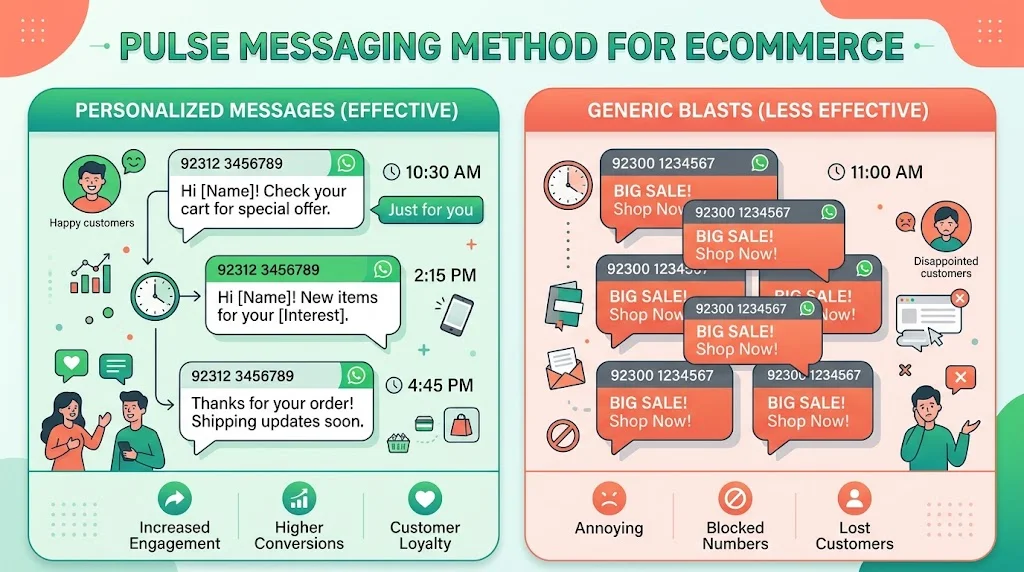
TL;DR: Endear reported that personalized messaging to existing customers grew more than 50% year-over-year across its retail platform. That supports a move toward ongoing customer conversations, but it does not establish performance benchmarks for Pakistani stores. The PULSE method — Personalize, Use WhatsApp, Layer email, Send at intent peaks, Evaluate weekly — turns that approach into a practical workflow. WeProms Digital’s email marketing automation services help connect those conversations across the customer journey.
A familiar ecommerce problem starts after the sale: a brand invests in customer acquisition through Meta and Google Ads, then contacts buyers mainly when another promotion arrives. An Eid discount or Independence Day sale can give customers a reason to return. It tells them much less about why a particular product suits their needs, whether their order is progressing, or when a favourite item is available again.
Endear’s analysis of more than 22,000 personalized campaigns and billions of customer messages offers useful context. Messaging to existing buyers was growing faster than outreach to non-purchasers. The findings describe activity on Endear’s platform, rather than a representative study of Pakistan. Still, they raise a useful question for stores in Lahore, Karachi and Islamabad: what happens between a customer’s first purchase and your next sale announcement?
The answer should involve better messages, not simply more of them. PULSE provides a repeatable way to decide who needs a message, what it should say and which channel fits.
What is the PULSE method for ecommerce messaging?
PULSE stands for Personalize by purchase history, Use WhatsApp for high-intent triggers, Layer email for post-purchase nurture, Send at intent peaks, and Evaluate engagement and revenue weekly. It treats customer communication as a connected journey, with each message serving a clear purpose.
Endear reported February email open rates of 56.1%, the highest in its analysis. That is an observation from its customer base, not a PULSE result or a target Pakistani stores should expect to reproduce. The report suggests opportunities beyond seasonal sales; it does not demonstrate that personalization alone caused higher engagement or repeat revenue.
Use the framework to build a testable system. Start with a useful customer event, choose an appropriate message, and compare results against your own baseline. Keep broader campaigns when they have a relevant offer, but avoid letting them collide with automated conversations.
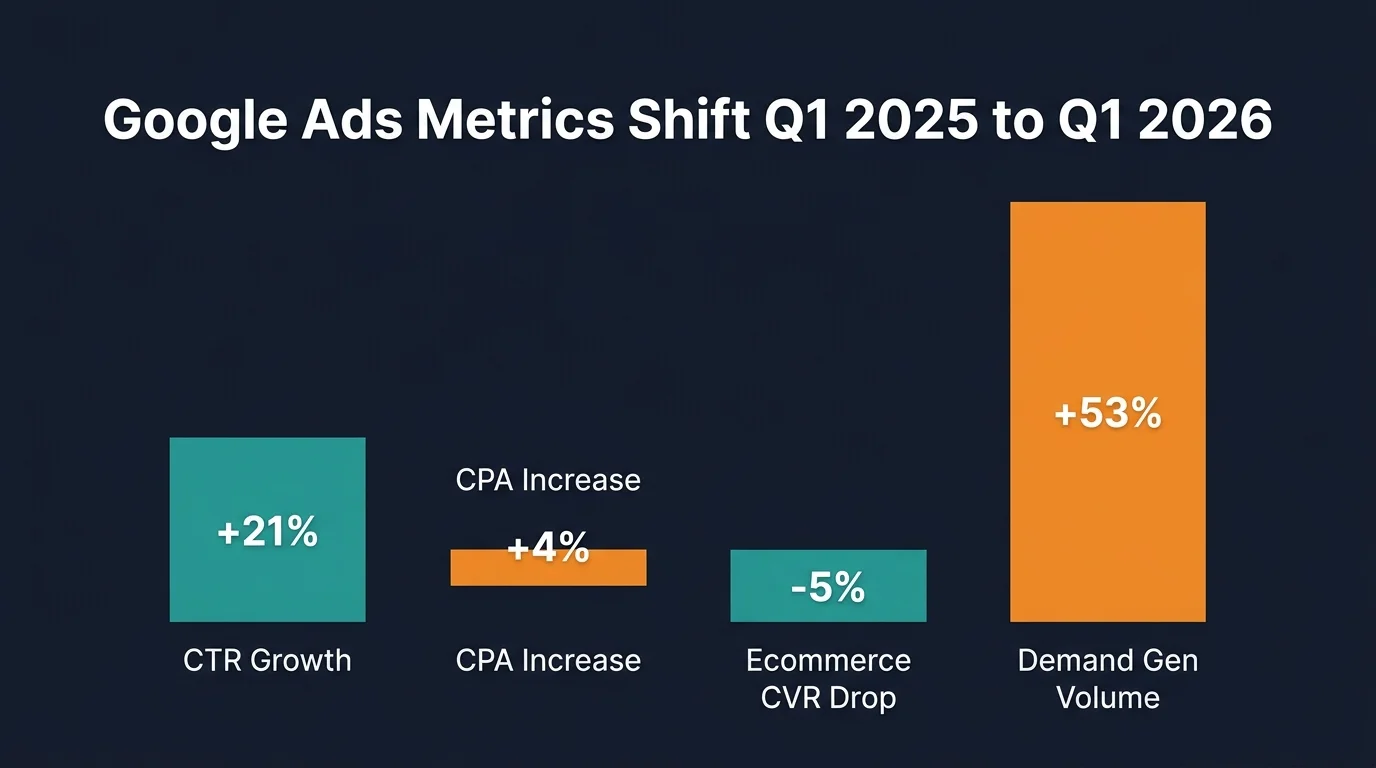
The numerical comparisons in this illustration should not be treated as forecasts or verified benchmarks for Pakistani stores.
| Metric | Monthly Blast | PULSE Messaging |
|---|---|---|
| Frequency | Fixed campaign schedule | Relevant triggers with contact limits |
| Segmentation | Broad customer list | Purchase history + behavior |
| Channels | Often a single channel | Coordinated WhatsApp, SMS and email |
| Performance review | Campaign-level engagement | Engagement, orders and customer feedback |
| Personalization | Generic offer or first name | Product, purchase history, expressed interest |
| Timing | Calendar-driven | Intent-driven, with suppression rules |
“Retailers are focused on ongoing conversations with customers, where every message is part of building lasting relationships and brand loyalists,” said Leigh Sevin, co-founder and CEO of Endear.
P: How does purchase-history personalization improve relevance?
Purchase-history personalization means using buying data to make the next message useful. Product category, order value and time since purchase can inform the recommendation. They should guide a hypothesis about customer needs, rather than become assumptions about someone’s budget or lifestyle.
A Karachi customer who bought an everyday lawn suit may appreciate a restock alert or care advice. Someone who bought formalwear might prefer complementary accessories. Neither necessarily wants another outfit immediately. Check the purchase context, available stock and previous responses before deciding what to send.
Begin with your store’s order records. Build manageable groups around average order value (AOV), product category and purchase recency. Set boundaries using your own order distribution and buying cycle, rather than importing arbitrary rupee thresholds. If this becomes difficult to maintain, customer segmentation and personalization can help turn those records into usable audiences.
Give each group a distinct reason to hear from you. Recent buyers may need product guidance. Customers approaching a likely replenishment point may welcome a reminder. Lapsed customers may need a reason to reconsider the store, including reassurance about an earlier delivery or service problem.
Keep the rules simple enough to explain. A segment definition should tell the team why the customer qualifies and what would remove them from the flow. Suppress customers who have already bought the recommended product, opted out or raised an unresolved complaint. Personalization loses its value when the message ignores what just happened.
U: When should Pakistani brands use WhatsApp for high-intent triggers?
WhatsApp Business Platform, often called the WhatsApp Business API, supports automated business messaging and integrations. It can suit conversations where customers need a quick answer, a product image or help completing an order. Treat its role as something to validate with your own audience; the cited DataReportal report does not substantiate the original claim about Pakistan’s WhatsApp user count.
Useful triggers include requested back-in-stock alerts, cart assistance, order updates and replenishment reminders. Each should reflect the customer’s permission and expectations. A cart reminder might ask whether the shopper needs help with sizing or delivery. A skincare reorder message should reflect actual purchase patterns rather than assume every customer finishes a product at the same pace.
Meta’s Business Messaging Policy requires opt-in permission and respect for opt-out requests. Business-initiated conversations require approved templates. Free-form replies are allowed within the 24-hour customer service window, which resets when the user messages you; outside it, approved templates are required.
Pricing also needs a different budgeting approach from the old conversation model. Meta charges on a per-message basis for delivered marketing, utility and authentication messages, with rates depending on category and recipient market. Provider charges may add to the bill. Check the current rate card and your provider’s quote before comparing WhatsApp with SMS.
Use WhatsApp where a reply would genuinely help. Assign someone to handle responses, clarify when support is available and stop reminders once the customer acts. Automation should open a useful conversation, with a clear route to a person when needed.
L: Why does email still matter for post-purchase nurture in Pakistan?
Email gives customers room to read product guidance, review recommendations and return to information later. That makes it useful for care instructions, styling ideas, onboarding and replenishment education. A message does not need an immediate reply to support the relationship.
Endear found that email remained its primary channel for structured communication. Its reported February engagement peak suggests that useful contact outside major sale periods deserves attention. It does not establish February as the best month for Pakistani stores, whose product mix and seasonal demand may differ.
Post-purchase nurture sequences should follow the customer’s experience. Send delivery-dependent advice after delivery is confirmed, rather than blindly counting from checkout. A fashion store might explain how to care for a garment, then suggest a complementary item when the customer has had time to use it. Avoid adding a sales pitch to every service message.
If you are not collecting email addresses, start by explaining what customers will receive and distinguishing order communication from promotional subscriptions. Make the messages readable on a phone and provide a clear way to stop marketing. Build a useful thank-you or care message before adding a complicated sequence.
Think of a fruit vendor at Lahore’s Anarkali Bazaar responding to the people in front of the stall. Someone choosing mangoes needs different help from someone asking how to keep them fresh. Ecommerce communication should show the same awareness. The customer’s current need gives the message its purpose; the calendar alone cannot do that.
Coordinate email with WhatsApp so customers do not receive competing reminders. A reply asking for support should pause promotional follow-up until the issue is resolved.
S: What are intent peaks and how do they improve calendar schedules?
Intent peaks are signals that a customer may be receptive to a particular message. Cart abandonment, confirmed delivery, a requested stock alert and an approaching replenishment point are useful places to look. They are starting hypotheses, not universal windows that guarantee a purchase.
Match timing to the task. Cart assistance should arrive while the purchase is still relevant, but leave room for customers to finish without interruption. Product advice should reach buyers when they can use it. Reorder reminders should account for pack size, previous purchase intervals and whether the customer already placed another order.
Calendar campaigns still have a role. Eid collections, launches and sale deadlines can be relevant shared events. The practical improvement is to check those campaigns against individual journeys. A customer waiting for a delayed parcel may need an update before another promotion, even during your busiest sale.
Build suppression into every flow. Stop cart messages after purchase, stock alerts when the product becomes unavailable and replenishment reminders after a reorder. Review overlaps across email, WhatsApp and SMS so that separate automations do not produce an exhausting stream of contact.
Test timing with comparable audiences and a clear outcome. Where practical, retain a group that does not receive the message to estimate whether it changes purchasing behavior. Evaluate completed orders and margin alongside clicks. A message that earns attention but encourages unnecessary discounts may be less valuable than the dashboard suggests.
The goal is to find useful moments for your customers, then refine them as you learn. No fixed shift in send volume can promise a particular revenue increase.
E: How do you evaluate messaging performance weekly?
Weekly evaluation should cover delivery, meaningful engagement and commercial outcomes. Check whether messages reached customers, whether they prompted clicks or useful replies, and whether resulting orders justified the cost. Include opt-outs and complaints so a short-term sales gain does not hide a deteriorating customer experience.
Email opens are a supporting signal. Klaviyo explains that Apple Mail Privacy Protection can inflate open rates by loading tracking pixels without a human opening the email. Click-to-open rate also inherits uncertainty from that denominator. Klaviyo does not provide SMS open rates, so avoid building a cross-channel scorecard around opens.
Shopify’s SMS analytics guidance cites general click-through benchmarks, but those are not established targets for Pakistani stores. Compare similar flows, audiences and offers within your own account. A delivery update and a promotional recommendation serve different purposes and should not be judged against identical conversion expectations.
Keep a spreadsheet or dashboard with delivered messages, clicks or replies, orders, revenue, messaging costs and opt-outs. Use consistent attribution settings and distinguish attributed revenue from revenue demonstrably caused by the message. For cash-on-delivery orders, review cancellations and returns before treating placed orders as realized revenue.
Inspect changes weekly, but avoid rewriting a flow because a small audience produced a noisy result. Look for persistent patterns, delivery problems or obvious customer friction. Change a clear variable, record the reason and allow enough activity to assess the result.
Read next: WhatsApp marketing and the cost of slow replies and Email Automation for Pakistani Ecommerce.
If your store relies on occasional blasts, start with the customer journey that has the clearest gap. WeProms Digital helps connect WhatsApp, SMS and email around those moments. Message WhatsApp +92 300 0133399 to discuss a messaging strategy audit.
Frequently Asked Questions
How often should Pakistani ecommerce brands message their customers?
There is no universal frequency that makes messaging relevant. Start with the events customers have agreed to hear about, then apply contact limits across channels. Review replies, purchases and opt-outs before adding more touchpoints. Behavior-triggered messages can still feel intrusive if they repeat information, arrive too often or continue after purchase. Let customers adjust their preferences, and keep essential service communication separate from promotional pressure.
Is WhatsApp marketing legal for Pakistani businesses?
Businesses must meet applicable legal requirements as well as WhatsApp’s platform rules. Meta requires opt-in permission, approved templates where applicable and respect for opt-outs. Pakistan’s Prevention of Electronic Crimes Act addresses spamming and requires direct marketers to provide an unsubscribe option. Using templates does not automatically establish legal compliance. Keep records of permission, make withdrawal straightforward and check requirements relevant to your campaign and products.
What is the cost of WhatsApp Business API in Pakistan?
Budget using delivered message volumes, categories and recipient markets, then add your provider’s applicable fees. Meta’s current pricing information describes per-message charging, so a flat rupee estimate per conversation is not a reliable planning basis. Ask providers to separate Meta charges, subscriptions and additional service fees. WeProms Digital’s SMS and WhatsApp marketing services can help plan a workflow around your expected usage and available budget.
Which is better for Pakistani ecommerce: SMS or WhatsApp?
Choose according to the customer’s preferences and the message’s purpose. WhatsApp suits conversations involving product images, questions and assistance. SMS can suit concise notifications where the customer expects them. Neither is automatically cheaper or more effective for every store. Compare delivery, response, completed orders and total cost using similar audiences. Avoid sending the same promotion through both channels simply because the customer’s phone number is available.
How do I personalize messages without a CRM?
Start with the order records available in your ecommerce platform. Group customers by relevant purchase history and recency, using boundaries that reflect your own store. Keep permission records alongside those audiences and update exclusions before each send. A spreadsheet can support a simple pilot, provided someone owns its accuracy and access. Move to a connected workflow when manual updates cause stale recommendations, missed opt-outs or repeated messages.
What tools do I need to implement the PULSE method?
A practical setup connects your ecommerce platform, a WhatsApp Business Platform integration and an email marketing tool. Shopify or WooCommerce, providers such as Gupshup or Twilio, and email tools such as Klaviyo or Mailchimp are options to assess. Confirm that the chosen integrations support the events and consent records you need. Test purchase suppression, delivery triggers, replies and unsubscribe handling before enabling a full customer journey.
Key Takeaways
- Endear reported personalized messaging to existing customers growing more than 50% year-over-year. This describes its platform activity, not a measured uplift for Pakistani ecommerce.
- Its February email open rate of 56.1% suggests opportunities beyond major sale periods, but does not prove a particular month or channel will perform best for your store.
- PULSE connects purchase-history personalization, WhatsApp conversations, email nurture, intent-based timing and weekly evaluation.
- WhatsApp planning must account for opt-in, template rules, current message pricing and the team’s ability to respond.
- Relevant triggers need suppression rules and contact limits. Customers should leave a flow when its purpose has been fulfilled.
- Evaluate delivery, meaningful engagement, completed orders and costs together. Use your own baseline rather than unsupported revenue promises or cross-channel open-rate comparisons.
About WeProms Digital
WeProms Digital provides email marketing automation and lifecycle messaging services from Lahore, serving Pakistani SMEs, ecommerce brands and D2C startups across Lahore, Karachi, Islamabad, Rawalpindi, Faisalabad and Multan.
The team specialises in SMS and WhatsApp marketing, email marketing automation and ecommerce marketing. Its work connects customer data, relevant messages and coordinated follow-up across channels, helping stores build practical journeys from purchase through support, replenishment and re-engagement.
Get in touch: hello@weproms.com · WhatsApp +92 300 0133399
Sources & References
- MarTech Series — The End of the Marketing Blast: Retail Enters the Conversation Era — Endear’s platform findings; not Pakistan-specific benchmarks.
- DataReportal — Digital 2026 Pakistan Report — digital-market context, not verification of the removed WhatsApp audience figure.
- Shopify Pakistan — SMS Analytics and Marketing Benchmarks — general measurement guidance.
- WhatsApp Business — Developer Hub — platform information.
- Endear — Retail CRM — platform background.
- WhatsApp Business — Messaging Policy — permission, templates and customer service windows.
- WhatsApp Business — Pricing FAQ — charging structure and provider fees.
- Klaviyo — Understanding Campaign Open Rates — email measurement limitations.
- Pakistan Code — Prevention of Electronic Crimes Act — spamming and direct-marketing unsubscribe requirements.
Additional reading from industry feeds: