

Server-side Google Tag Manager gives ecommerce stores control over how measurement data reaches advertising platforms. It requires a configured server container and an event source; creating a GTM container does not automatically move tracking server-side. Google’s introduction describes how clients receive incoming requests and turn them into events for server-side tags.
Here is the part Pakistani ecommerce operators can discover after deployment: more recorded events do not necessarily mean more accurate measurement. The dashboard looks healthier. The optimisation loop feeding ad platforms may still be learning from duplicates, unpaid orders or incomplete customer journeys.
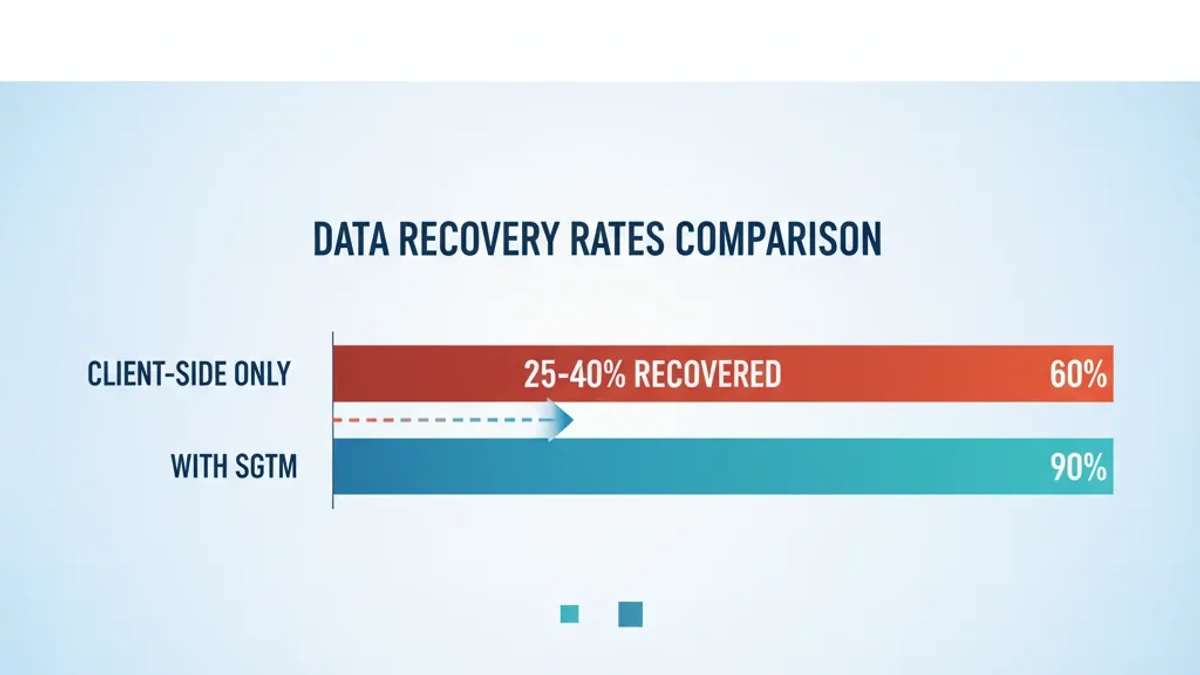
This teardown examines server-side GTM setups for Shopify and WooCommerce stores in Lahore, Karachi and Islamabad — what the architecture achieves, and where implementation choices can corrupt Meta Conversions API signals, Google Ads Smart Bidding data and GA4 revenue attribution. Recovery depends on the original tracking gaps, the event source and the quality of the configuration. There is no dependable recovery percentage that applies to every store.
What this gets right
The core architectural improvement is real. A server container receives measurement data, processes it under your control and forwards it to configured destinations. That creates a useful place to validate events before they reach reporting tools and advertising systems.
A first-party endpoint such as data.yourstore.com can reduce reliance on direct browser requests to advertising domains. It does not make browser-originated requests invisible to blockers. If the browser never sends an event, the container cannot recover it without another source, such as a backend integration. Distinguish that server-to-server path from simply routing browser events through your own domain.
Page performance can improve when migration actually removes browser work. GA4, Meta, Google Ads and other scripts can compete with theme code, product images and checkout interactions. Google’s server-side tagging guidance explains how a shared stream to the server can reduce vendor requests and JavaScript libraries. Keeping every existing browser tag while adding a server container does not deliver the same benefit. Measure the storefront before and after deployment instead of promising a fixed speed improvement.
The data control layer matters for stores handling customer information. Server-side processing lets you validate, filter and transform fields before forwarding them. Customer contact details should only reach destinations where their use is permitted, with the required formatting and hashing. Hashing is not a substitute for consent or a reason to collect additional information purely for matching.
For hybrid Meta setups, the reliability benefit is genuine. Meta recommends combining Pixel and Conversions API, with consistent identifiers for corresponding events. CAPI can capture events missed because of browser connectivity or page-loading problems. Better coverage gives advertising systems more usable information, but it does not guarantee higher ROAS. Event quality and the outcome being measured still determine whether the additional signal helps.
Hosting also needs a workload-specific budget. Managed providers and direct Cloud Run deployments have different capacity limits and operational requirements. Compare requests, scaling, support, logging and maintenance before choosing. A server-side GTM implementation should include those decisions alongside event design, rather than treating hosting as the complete setup.
Where this breaks
The failure modes are easiest to miss when operators monitor dashboard totals without tracing individual orders through the system.
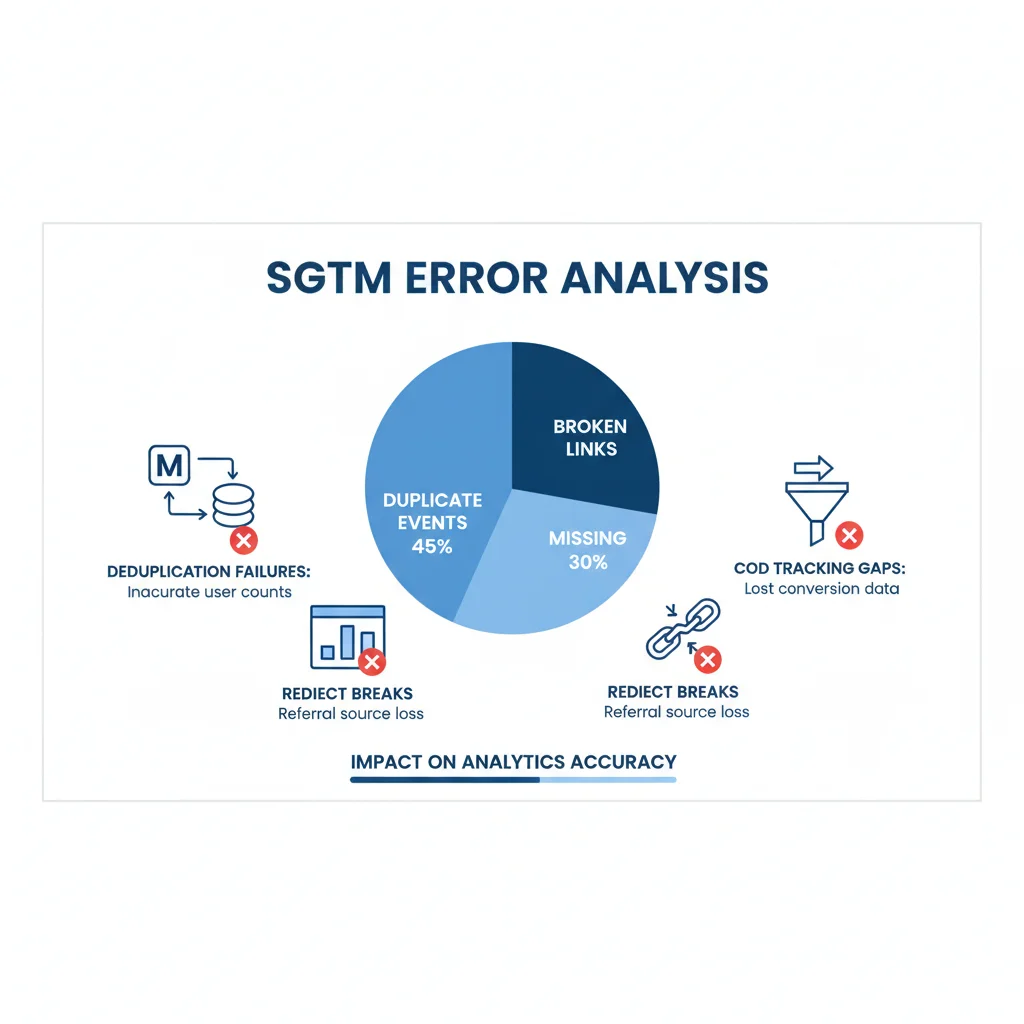
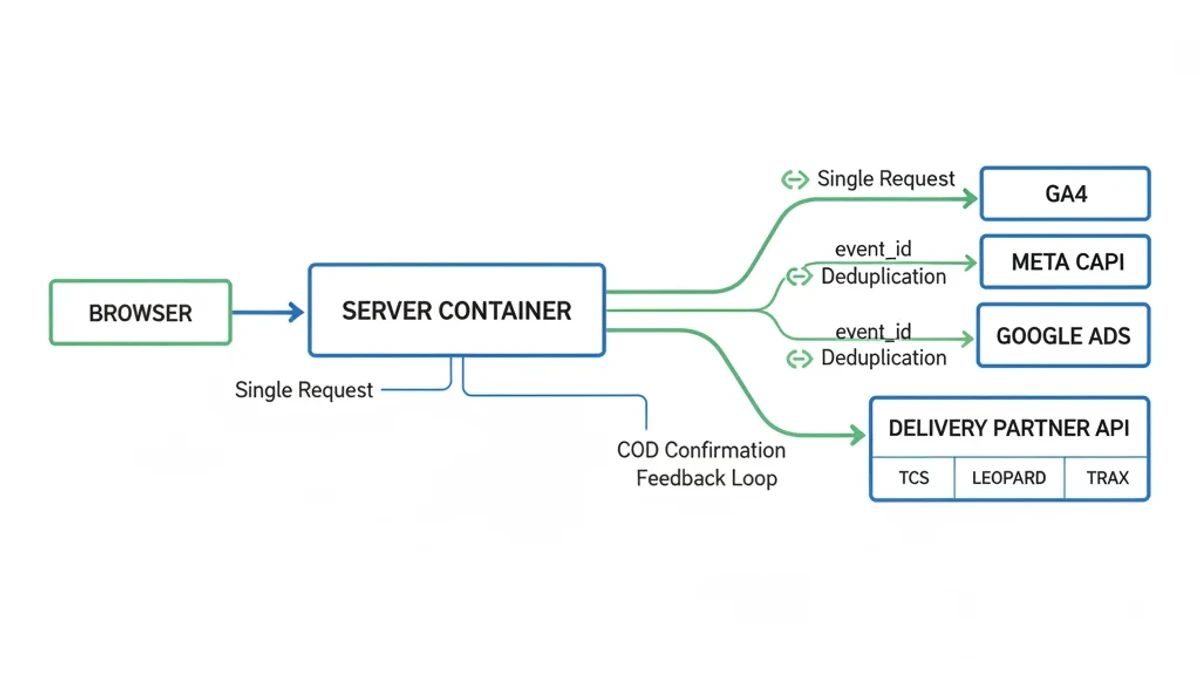
Event deduplication gaps. A hybrid Meta setup deliberately sends corresponding browser and server events. Those events need coordinated deduplication keys. For an identifier-based implementation, use the same event name and event ID across both paths. Missing or inconsistent keys can cause duplicate reporting; an increase in recorded purchases is not proof that previously lost purchases were recovered.
Shopify’s native integration needs particular attention. Its Enhanced and Maximum data-sharing settings already use Conversions API alongside the Pixel. Adding a separate sGTM implementation without auditing that connection can create overlapping server senders. The problem is broader than matching a browser tag to a new server tag: you need to know every system submitting the purchase.
Assign ownership of each event before adding another integration. For purchases, a stable order-derived identifier can work when the browser and server both have access to it. Map the browser Pixel’s eventID and the server event’s event_id consistently. Replayed callbacks should retain the identifier for the same event rather than generating a fresh purchase each time.
JazzCash and EasyPaisa redirect breaks. Wallet checkout behaviour depends on the gateway integration. Where payment happens off-site, a customer may complete payment without returning to the storefront. A purchase event that depends entirely on the return page can therefore be missed. A verified backend payment notification provides a separate way to establish the outcome.
However, sGTM does not automatically subscribe to Shopify webhooks or decide whether an order is paid. The integration must explicitly supply that information. Trace the gateway callback, the store’s payment update, the event payload and the destination response. An order-created notification should not be assumed to prove successful wallet payment.
A brief callback delay is not, by itself, evidence that the conversion missed Google Ads attribution. Google defines conversion windows relative to the ad interaction, with settings measured in days. Investigate missing identifiers, incorrect event timestamps, failed delivery and the applicable upload rules before blaming ordinary payment-processing latency. Receipt time and the time the customer converted are different pieces of information.
COD confirmation loop stays open. Cash-on-delivery stores must distinguish an order request from a completed sale. If Purchase fires at placement, the advertising platform sees that milestone even when the parcel is later refused, cancelled or returned. The size of this gap should come from the store’s own order and courier records, not a national rejection-rate assumption.
That does not make every placement event false. It makes it the wrong proxy when the business evaluates success against collected revenue but bids towards order submissions. More reliable transmission can strengthen that mismatch. The algorithm receives clearer information about an outcome that may not represent the commercial goal.
Closing the loop starts with joining courier outcomes to stable order IDs. Define what counts as delivered, collected, returned and refunded, and decide how each state affects reporting. A courier API or reconciled export can supply the outcome; the appropriate route depends on the logistics partner and the destination platform.
Do not assume another Purchase event will overwrite the original. Google Ads conversion adjustments support restating values or retracting eligible conversions. A separately tracked delivery outcome needs its own conversion design. Plan offline conversion integration so placement and delivery are not both counted as independent revenue for the same sale.
sGTM version drift. Runtime maintenance matters, but the claim that a server-image update removed automatic GA4 client loading is unsupported. Google’s release notes document runtime and dependency changes; its introduction still describes a pre-installed Google Analytics client. An older image alone does not prove that a container has stopped receiving events.
Treat version drift as an operational risk to investigate. Record the deployed image, review release notes, test changes and verify production traffic after deployment. When events disappear, inspect incoming requests, client claiming, triggers, credentials and destination responses. A container can fail because of configuration or infrastructure changes even when its runtime is current.
Verbose logging costs. Request logging can create charges, but session count alone cannot establish the bill. Each session may produce many requests, and costs depend on logged volume, applicable allowances and other configuration choices. Fixed monthly or annual cost claims are not a useful substitute for checking the project’s billing breakdown.
Google’s Cloud Run setup guide describes request-log filtering through Cloud Logging’s Logs Router. This is not simply a container setting. Reduce unnecessary request and console logs while retaining useful error visibility. Blindly removing all production logs makes failed events harder to diagnose.
What the corrected configuration looks like
Start with a documented event contract: the business milestone, event name, identifier, timestamp, value, currency and permitted customer fields. Give each integration a defined role. The data layer implementation should expose the fields your store actually uses; do not copy a legacy ecommerce variable path into a different schema and assume it contains the order ID.
For Meta, verify corresponding browser and server events share the intended name and identifier. Inspect Test Events and deduplication diagnostics, then reconcile received events against eligible backend orders. Event Match Quality describes customer matching; it does not certify deduplication. Ads-attributed purchases also should not be expected to equal every order in Shopify, because attribution and total order accounting answer different questions.
For JazzCash and EasyPaisa, use the verified payment state supplied by the gateway and commerce backend. Define the wallet purchase milestone as successful payment, then test successful, failed, abandoned and repeated callbacks. Preserve available attribution information and consent state through the integration. Make retries safe so a repeated notification cannot create another sale.
For COD, keep placement and delivery distinguishable in both reporting and campaign goals. Reconcile courier records, choose the eligible import or adjustment mechanism and check its current timing requirements. A batch process can be a practical starting point, but it only helps bidding when the intended outcome is configured appropriately and the upload succeeds. Keep unpaid wallet orders separate from legitimate COD placements.
For runtime maintenance, compare the deployed image with Google’s release notes and test upgrades before promotion. Include preview checks and live destination validation. A successful deployment message proves the service started; it does not prove that purchases reached Meta, Google Ads or GA4 with the correct values.
For costs, inspect compute, network and logging separately. Configure suitable scaling limits and billing alerts, and filter noisy logs through Logs Router. Finish with tag management and event tracking QA that follows real order states through every destination. Document failures and retry behaviour so the store can maintain accuracy after launch.
Frequently Asked Questions
How much does server-side GTM cost for a Pakistani ecommerce store?
Request a quote based on traffic, event volume, destinations and support needs. Separate recurring hosting from initial configuration and ongoing maintenance. Wallet callbacks, courier integrations and reconciliation can materially change the scope. For direct Cloud Run hosting, use Google’s configuration guidance and pricing calculator rather than a fixed rupee estimate. Improved measurement does not guarantee that implementation pays for itself immediately.
Why does Meta show higher ROAS than actual revenue after enabling sGTM?
Possible causes include duplicated events, unconfirmed COD purchases, incorrect values and differences between attributed revenue and collected revenue. Audit every sender, including Shopify’s native Meta integration. Check event identifiers and deduplication diagnostics, then compare equivalent order cohorts and payment states. A discrepancy alone does not establish which failure occurred, and no universal percentage threshold proves missing deduplication.
Can server-side tracking fix JazzCash and EasyPaisa payment tracking?
It can remove dependence on the customer’s return-page visit when connected to verified backend payment information. The container cannot infer a successful payment from an order-created event. Test the gateway’s actual callback flow and retain the identifiers needed for attribution. Confirm that failed payments are excluded and repeated notifications do not generate duplicate purchases.
What is the biggest sGTM mistake Pakistani agencies make?
A serious mistake is treating increased event volume as proof of success. Overlapping integrations, inconsistent identifiers and premature purchase milestones can all inflate that volume. There is no verified basis for ranking a single mistake across Pakistani agencies. Require evidence that the setup reports the intended business outcome accurately, including wallet payment failures and COD delivery outcomes.
Sources & References
The platform documentation linked above supports the implementation guidance. The following existing references provide additional background; their performance claims should not be treated as forecasts for an individual store.
- Cometly — Server-Side Conversion Tracking Benefits
- Digital Applied — Mobile Marketing Statistics 2026 Data Points
- Virtina — Server-Side Tracking for Ecommerce
- Littledata — Meta CAPI FAQ and Documentation
- iubenda — A Simple Guide to Server-Side Tracking
- Analytics Mania — Facebook Conversions API for Shopify