TL;DR: A customer win-back campaign gives past buyers a relevant reason to return through email, WhatsApp and SMS. For Pakistani ecommerce stores, the sequence should distinguish delivered purchases from refused COD orders and measure revenue after fulfilment. WeProms Digital builds customer win-back campaigns around customer history, appropriate offers and delivery outcomes. The headline’s recovery figure is not a verified case-study result or a forecast for your store.
A Lahore fashion store can spend heavily on Meta ads while overlooking buyers already in its database. Some customers refuse a cash-on-delivery (COD) parcel; others receive their order but never return. Those situations require different responses. A customer win-back campaign is a structured sequence for past buyers who have stopped purchasing. Its job is to understand the gap, offer a reason to return and establish whether the recovered sale is profitable.
What does a PKR 2.7M win-back actually look like for a Pakistani ecommerce store?
Start with your customer records, not the headline. There is no verified calculation here supporting that annual recovery figure. A useful forecast needs the number of eligible inactive buyers, their likely purchase value and a recovery rate measured from your own campaigns. Without those inputs, a revenue target is an assumption.
Define inactivity around the product’s normal buying cycle. A skincare customer may need a replenishment reminder well before an electronics buyer needs another device. Examine the time between fulfilled purchases before choosing the trigger. Customers should enter a win-back flow because they are overdue for a relevant purchase, not simply because an arbitrary waiting period has passed.
Then build a forecast from eligible customers, observed reactivation and net fulfilled order value. Keep the campaign period clear: recovering buyers from an existing list does not establish a recurring monthly result. Future performance also depends on how many customers become inactive and whether recovered buyers stay active.
Before paying ads to reach existing customers again, check what your customer database can support. The checkout-loss reporting linked below provides market context, but checkout friction, failed deliveries and lapsed buyers are separate problems. An estimate for one cannot establish the revenue available from another.
Why do most Pakistani ecommerce customers never return?
There is no verified national retention benchmark here establishing that most buyers never return. For an individual store, investigate delivery experiences, product satisfaction, payment choices and post-purchase communication. Your order and support records are a better starting point than a broad market claim.
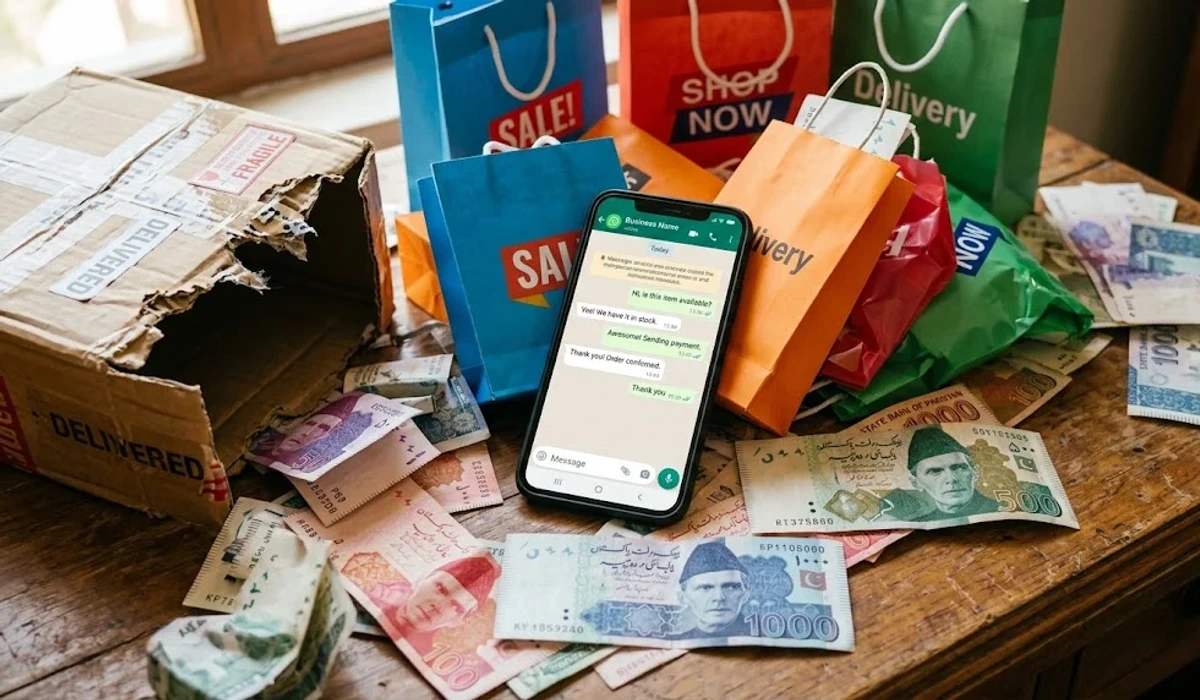
A refused COD delivery creates a different loss from a customer who stops reordering. Check your courier agreement and invoices for outbound charges, return charges and any handling costs. Apply those costs to failed deliveries rather than all orders. Also distinguish a cancelled order that never shipped from a parcel that travelled back to the warehouse.
Think of ordering biryani that arrives cold. Another promotion may not persuade you to try the restaurant again. An apology and a credible explanation of what will improve could matter more. For an ecommerce store, that might mean resolving a sizing complaint, explaining delivery arrangements or replacing a damaged product before asking for another purchase.
Post-purchase silence is another issue to investigate. If communication ends at delivery, customers may never see product-care guidance, complementary products or a useful reorder reminder. A relevant post-purchase email flow gives the relationship somewhere to go before a customer becomes inactive.
Payment choices also deserve attention. Check whether customers can use their preferred method, including JazzCash or Easypaisa where supported. Offering a prepaid option may address a payment preference, but it does not by itself prove lower returns. Product quality, delivery reliability and refund handling still shape the next order.
A useful recovery message addresses the reason a customer stopped buying. Faster sending cannot compensate for an unresolved complaint or an irrelevant offer.
Use support conversations and delivery records to decide what the message needs to say. Where the reason is unknown, invite a reply instead of assuming a discount will fix it.
Which channels recover the most churned customers in Pakistan?
There is no verified channel ranking here for Pakistani ecommerce. Choose between WhatsApp, email, SMS and retargeting using customer preferences, contact permissions, available data and your own fulfilled-order results. A channel that gets quick replies may still generate fewer profitable deliveries.
| Channel | Recovery Evidence to Track | Cost to Check | Best For |
|---|---|---|---|
| Replies and fulfilled repeat orders | Provider and messaging charges | Customers who welcome conversational follow-up | |
| Clicks and fulfilled repeat orders | Platform and sending costs | Product guidance, recommendations and detailed offers | |
| SMS | Link visits and fulfilled repeat orders | Provider charges for the message sent | Brief reminders with a clear action |
| Meta Retargeting | Fulfilled repeat orders and incremental lift | Media spend and creative costs | Eligible past buyers reachable through advertising |
Price the actual audience and message plan before launch. Include platform charges, creative work and offer costs as well as sending fees. Obtain current quotes from your providers; a generic cost-per-contact table cannot establish what a particular campaign will cost.
WhatsApp can support a conversation about delivery concerns, while email gives more space for product information. SMS suits a concise reminder. Test these roles against customer behaviour rather than assuming that open rates predict recovered revenue. A message being read is not the same as a customer paying for and keeping an order.
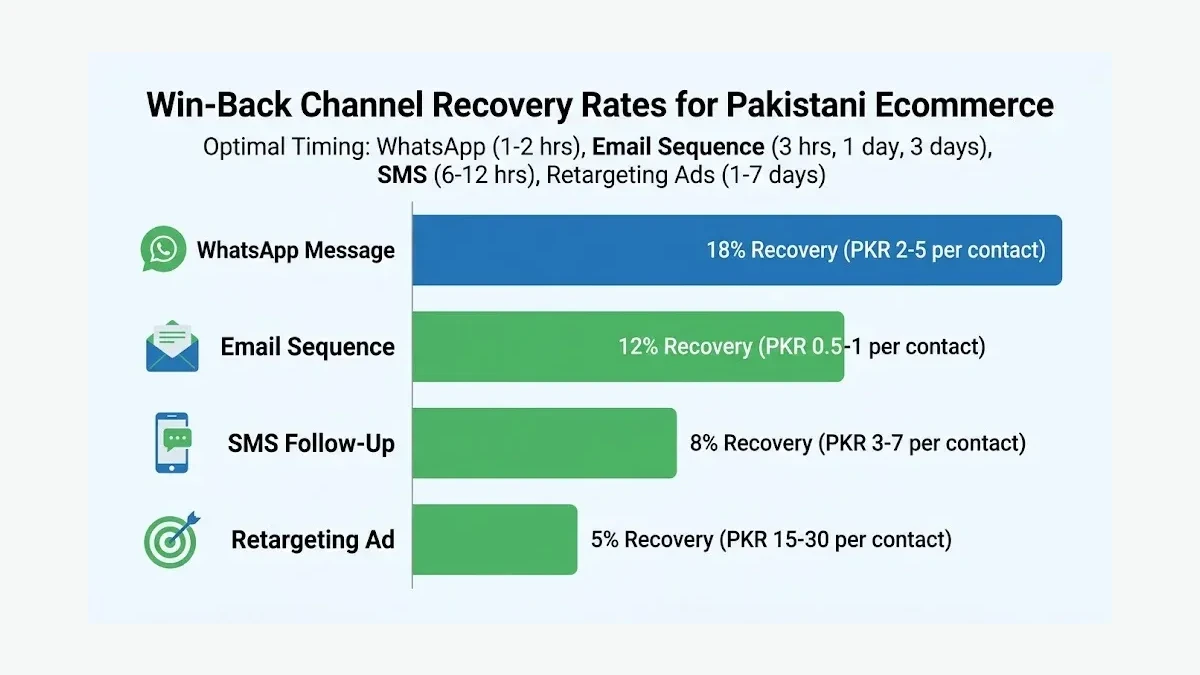
The existing graphic’s figures are not verified benchmarks. Use the table’s measurement approach when planning a campaign. Set a coordinated sequence across channels, stop promotional follow-ups when someone purchases or opts out, and avoid overlapping messages from separate automations.
How do you build a win-back sequence for Pakistan’s COD market?
Build separate routes for customers with fulfilled purchases, people whose COD deliveries failed and shoppers who abandoned checkout. They may all need follow-up, but only the past buyers belong in a customer-reactivation result.
Step one: segment your inactive customers. Export purchase and fulfilment history from your store or customer relationship management (CRM) system. Identify buyers overdue for another purchase, then check refunds, support issues and contact preferences. Keep failed-delivery recovery and cart abandonment separate so their results do not inflate the win-back campaign.
Useful customer segmentation combines purchase value with product category, buying frequency and delivery history. A high-value customer with an unresolved complaint needs different treatment from a satisfied buyer who simply has no immediate need to reorder. Exclude records you cannot contact appropriately.
Step two: craft the offer. Start with a reason to return: replenishment, a relevant new product, help using an earlier purchase or a resolved service issue. Test discounts and free shipping against your margins. There is no verified basis here for claiming that a particular discount consistently beats loyalty points for Pakistani buyers.
Step three: deploy the sequence. Begin with a helpful reminder through a suitable channel. Follow with a relevant offer if the customer remains inactive, then use another permitted channel where it adds value. Keep the timing consistent with the buying cycle. Any expiry must be real, and a reply should reach someone able to help.
Avoid automatically increasing the discount after every ignored message. Silence may mean the product is unnecessary, the customer is dissatisfied or the channel is unwelcome. Set a stopping rule and suppress customers who buy, unsubscribe or need support rather than more promotions.
Step four: track results. Add UTM parameters to campaign links to label traffic by source, medium and campaign. Use analytics to understand visits, then reconcile orders with fulfilment and payment records. Your marketing reporting should distinguish placed orders from delivered sales and explain how revenue is attributed.
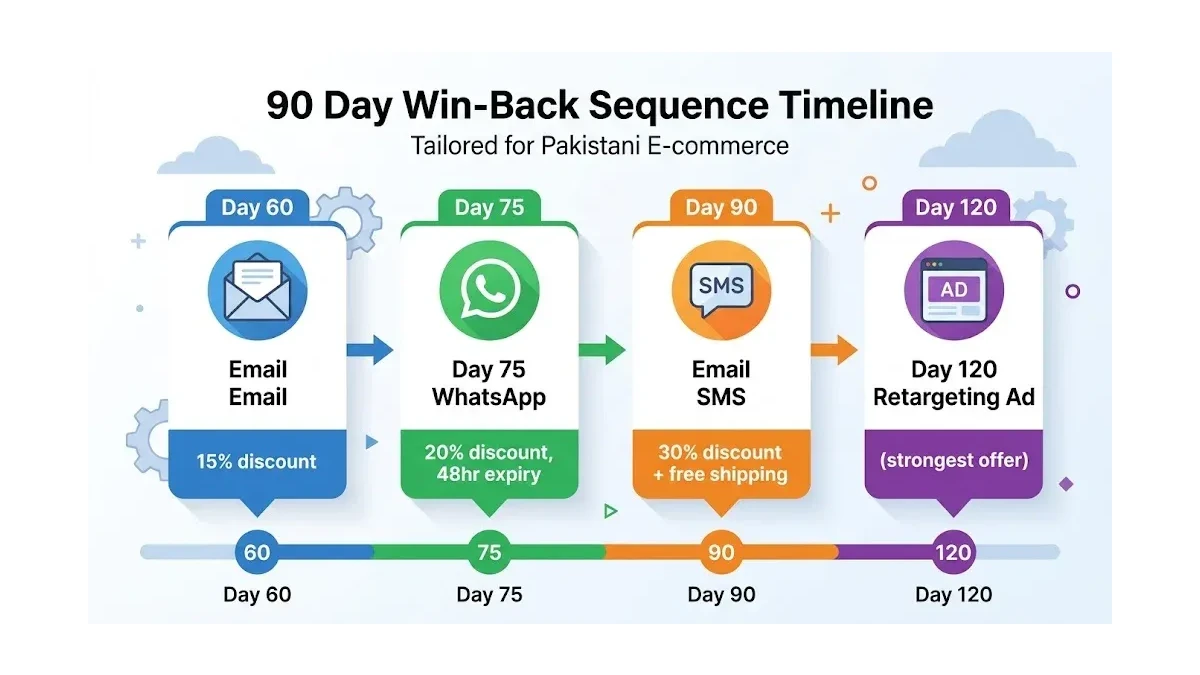
Treat the existing timeline as an illustration, not a prescribed schedule. Choose timing and incentives from the store’s buying cycle and margins. Before activating the flow, test exclusions and purchase-triggered exits so a returning buyer does not receive an increasingly urgent discount after ordering.
What does the win-back ROI look like compared to new customer acquisition?
Win-back can make commercial sense because you already have a customer relationship and purchase history. That does not establish a universal cost advantage. Compare acquisition and reactivation using the same reporting period, cost definitions and delivery standard. A placed COD order should not count as a completed customer recovery.
Calculate the cost per recovered customer from campaign spending divided by customers with a fulfilled repeat purchase. Include platform and messaging fees, campaign work and any paid retargeting. Assess discounts, fulfilment charges, payment fees and returns when calculating contribution from those sales. Report revenue and profit separately.
A customer retention strategy also needs an incrementality check. Some inactive buyers would have returned without the campaign. Where practical, retain a comparable group that receives no win-back messages and compare fulfilled repeat purchases. Explain limitations if the audience is too small or the groups differ materially.
The previous claim that a global email ROI ratio transfers directly to Pakistani win-back campaigns is unsupported. Platform fees alone are not the full campaign cost, and attributed sales are not necessarily additional sales. Use the store’s own contribution and cost data when deciding whether to continue.
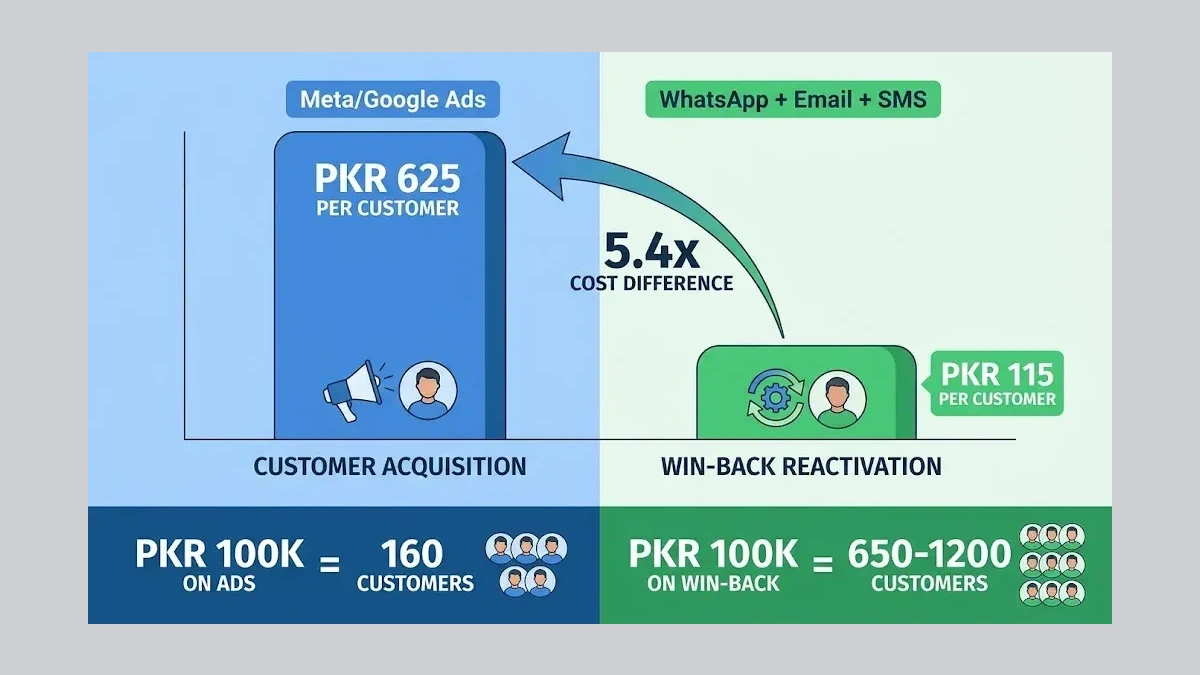
The existing cost graphic does not establish a reliable acquisition-to-reactivation ratio. Review results after fulfilment and returns have had time to appear. A campaign that looks strong at checkout can look different once discounts, failed deliveries and refunds are included.
Your Win-Back Campaign Launch Checklist
Run through this list before sending a message:
- Define inactivity using fulfilled purchase history and the product’s buying cycle
- Segment buyers by purchase value, product interest and delivery history
- Separate lapsed buyers, COD refusals and cart abandoners
- Check contact permissions, preferences and suppression lists
- Add consistent source, medium and campaign tags to campaign links
- Write messages that address each segment’s likely reason for lapsing
- Confirm provider charges and calculate the margin available for offers
- Test purchase exits, unsubscribe handling and support routing
- Connect analytics reporting with delivery, payment and refund records
- Set a test budget and review date appropriate to the fulfilment cycle
Read next: Abandoned Cart and Browse Recovery and Email Automation Revenue for Pakistani Ecommerce.
If COD delivery problems and post-purchase silence are costing your store repeat business, WeProms Digital can help build a coordinated recovery system. The work includes customer segmentation, relevant messages and reporting that connects campaign activity with order outcomes. Reach out at hello@weproms.com or WhatsApp +92 300 0133399 to discuss your customer data and recovery goals.
Frequently Asked Questions
How much does a customer win-back campaign cost for a Pakistani ecommerce store?
Costs depend on audience size, sending frequency, software, messaging providers and implementation work. Ask for a quote separating setup, recurring platform charges, messaging and campaign management. Budget for incentives and fulfilment costs too. A fixed monthly revenue promise is not a useful substitute for a forecast based on your customer records.
What is the difference between customer retention and win-back campaigns?
Customer retention supports ongoing purchasing through useful post-purchase communication, reorder reminders and loyalty activity. Win-back targets past buyers who have become inactive relative to their normal buying cycle. Keep cart abandonment separate: someone who has never completed a purchase is not yet a returning customer, even if a recovery message produces a sale.
How many messages should a Pakistani win-back campaign include?
Use enough messages to explain the reason to return without repeating the same request across every channel. Set the sequence around purchase frequency, customer preferences and engagement. Stop when someone purchases or opts out, and review complaints and replies. There is no verified universal message count that maximises recovery for every store.
Does WhatsApp win-back work better than email for Pakistani customers?
Test both using fulfilled repeat purchases and contribution after costs. WhatsApp may suit questions and conversational follow-up; email may suit detailed recommendations. Reach depends on which contact details and permissions your store holds. Avoid choosing a winner from open rates alone, and coordinate messages so customers do not receive duplicate offers.
How do COD returns affect win-back campaign strategy in Pakistan?
Investigate why delivery failed before sending another offer. A wrong address, missed delivery attempt and product concern need different responses. Confirm the customer still wants to hear from you and explain any delivery changes. Offer suitable payment choices, including supported wallets, without assuming prepaid payment resolves the underlying reason for refusal.
What tools do Pakistani stores need for win-back campaigns?
Start with reliable customer and order records, a sending platform and a way to match campaign responses with fulfilled purchases. Add WhatsApp or SMS where the audience and workflow justify them. Analytics can help explain visits, but order and payment records establish the commercial outcome. WeProms Digital can assess the setup through email.
How long does it take to see results from a win-back campaign?
Replies and orders can appear before you have a reliable commercial result. Allow for the message sequence, delivery, payment settlement and returns before judging performance. The review period should reflect your operations and product cycle. Keep watching whether recovered customers purchase again without repeated discounts; an initial response alone does not establish lasting retention.
Key Takeaways
- Treat the headline revenue figure as unverified, not a forecast or documented result.
- Separate lapsed buyers from COD delivery failures and abandoned checkouts before measuring recovery.
- Choose channels using customer preferences, current provider costs and fulfilled-order performance.
- Build offers around the reason for inactivity and the contribution available after costs.
- Coordinate messages across channels and stop follow-ups when customers purchase or opt out.
- Compare acquisition and win-back on consistent terms, allowing for returns and customers who would have returned anyway.
About WeProms Digital
WeProms Digital provides customer win-back and retention marketing services for Pakistani ecommerce brands. The team helps stores organise customer data, plan email and messaging sequences, and connect campaign reporting with order outcomes.
The focus is a workable recovery process: relevant segments, useful messages and a clear view of the sales that survive fulfilment. Campaign targets should follow the store’s customer history and margins rather than an assumed recovery benchmark.
Get in touch: hello@weproms.com · WhatsApp +92 300 0133399
Sources & References
These links provide background reading. They do not establish the headline result, channel recovery rates or a guaranteed return for a Pakistani store.
- BrandSynario — $1.61B Lost at Checkout: The Hidden Cost Holding Back Pakistan’s Ecommerce Growth
- Litmus — The Dangers of Generative AI in Email Marketing
- Pakistan Today — $1.61B Drained Through Cross-Border Payments
- Shopify PK — AI Marketing Statistics for Ecommerce
- LeadPakistan — $1.61B Lost at Checkout: Hidden Cost of Pakistan’s E-Commerce Growth
- XStak — Online Payment Gateways in Pakistan
- Buzz Interactive — Payment Gateways in Pakistan
Additional reading from industry feeds: