The Two-Week Google Delay Quietly Wrecking Pakistani SEO Retainers
By Hamza Ali — July 13, 2026. Last updated: July 2026.
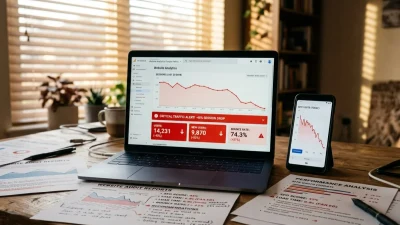
Consider a Lahore apparel brand paying PKR 180,000 a month on an SEO retainer. The team fixes a tangled canonical mess on June 1. Rankings do not move for two weeks. On day 18, the owner fires the agency and demands a refund. The agency did the work. Google just had not finished processing it.
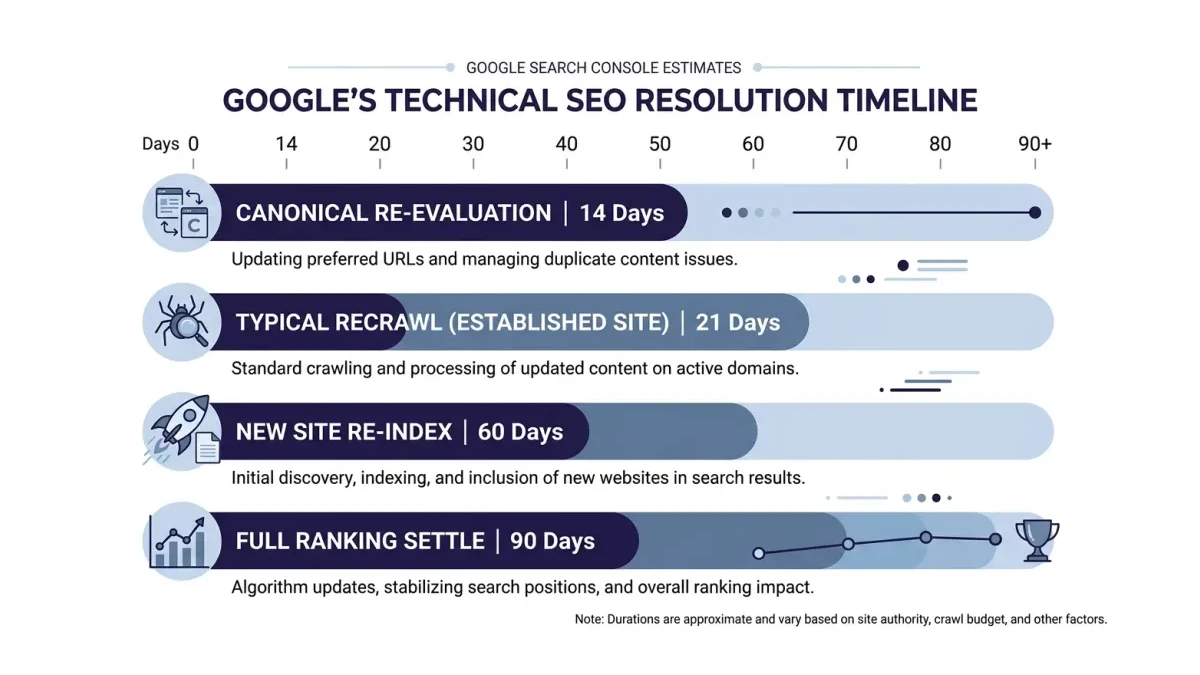
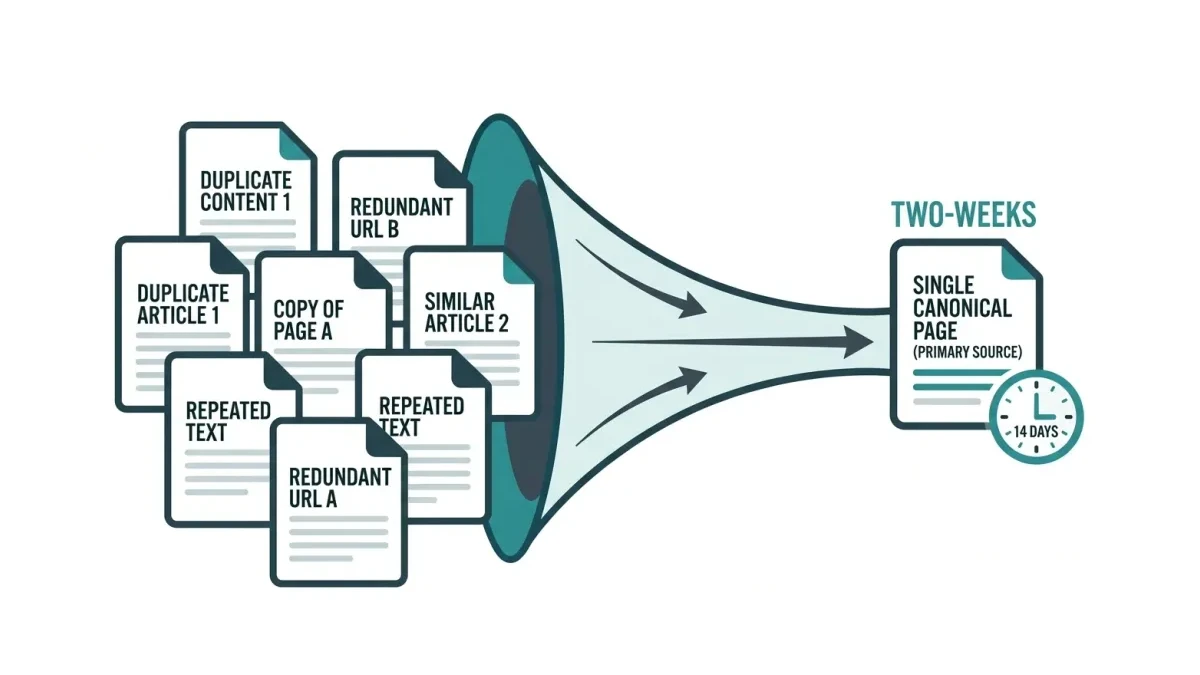
That is not a story about a bad agency. It is a story about a timeline most Pakistani business owners have never been told. As of July 10, 2026, Google’s updated documentation confirms that canonical fixes can take up to two weeks to register after the underlying issue is corrected. The work is done. The result is invisible. And the client is already counting the days.
Canonical tag — a line of HTML code that tells search engines which version of a page is the original, so duplicate pages do not compete with each other. Fixing one sounds instant. Google’s re-evaluation is not.
Here’s the thing. Pakistani SMEs spend between PKR 25,000 and PKR 250,000 a month on SEO. At those rates, a two-week silence from Google reads as failure. Owners do not see crawl queues or canonical clusters. They see a dashboard that has not moved, and they make a hiring decision based on it. The fix is not cheaper SEO. It is a realistic understanding of the clock Google actually runs on.
The setup that burns a retainer
Most technical SEO work in Pakistan lands in two buckets: on-page content tweaks and behind-the-scenes structural fixes. The behind-the-scenes bucket is where retainers die. When a developer sets the wrong canonical, or when a Shopify store creates twenty duplicate URLs for one product, Google groups them into a duplicate content cluster and picks one version to rank. The other versions get suppressed.
We see this pattern across Lahore, Karachi, and Faisalabad ecommerce sites every week. A store owner launches a sale. The sale creates new tracking URLs. The tracking URLs duplicate the product page. Google folds them into one cluster. The original product page quietly drops out of results. The owner blames the SEO team.
This is especially common on Shopify stores exporting product feeds to Google Shopping, where every variant and every sale price generates a new URL. A Karachi fashion retailer running fifty SKUs across three colour variants can quietly produce 150 near-duplicate product pages inside a single month. Google clusters them, suppresses the originals, and the merchant wonders why category traffic halved overnight.
The compounding problem is that fixing the canonical does not unlock the page immediately. Google has to recrawl, re-cluster, and re-evaluate. Industry practitioners put the realistic recrawl window at two to four weeks for established sites, and one to three months for newer or lower-authority domains. That is the clock your retainer is actually running on. Our technical SEO and AI search visibility work treats that clock as the baseline, not the exception.
So what? If your agency fixes a canonical on day one of a three-month contract, you may not see movement until the contract is half over. That is not underperformance. That is how Google re-checks a corrected input.
Where the money actually goes during the silence
Book a free strategy call - we'll audit your current setup and identify the highest-impact fixes.
Pakistani SEO budgets get spent whether Google moves or not. The work still happens. Audits get run. Tags get corrected. Internal link structures get rebuilt. But the reporting cadence most agencies use is monthly, and most monthly reports cannot explain a silent dashboard.
That silence has a PKR cost. At PKR 180,000 a month, a two-week invisibility window means the client has spent roughly PKR 90,000 before a single ranking moves. For a Karachi clinic competing on high-intent keywords, that feels like money flushed. For a Multan manufacturer chasing export inquiries, it feels like the agency is doing nothing.
The honest framing is different. Google uses more than 200 ranking signals to evaluate any page. Canonical status is one of them. When that one signal is broken, dozens of others still have to be re-evaluated after the fix. The two-week window is not Google being slow. It is Google re-checking 200-plus signals against a corrected input.
The same clock governs every structural change Google has to validate. A Google Business Profile with reviews that vanished from the dashboard, an hreflang correction across an Urdu-and-English bilingual store, a robots.txt fix that unblocks a category: each one enters the same two-to-four-week recrawl queue. Pakistani owners read each silence as a separate failure. They are really the same queue, processing in the same window.
Google does not rush for retainers.
Here is the Pakistani analogy. Fixing a canonical is like submitting a CNIC correction at a NADRA office. You hand over the paperwork. The officer stamps it. Then you wait, because the update has to propagate through every database that references your record. The fix is instant. The recognition takes weeks. Your SEO retainer runs on that same NADRA clock, and most owners fire their agency somewhere in the waiting room.
Why short retainers set up both sides to lose
A one-month SEO trial is the most common hiring pattern among Pakistani SMEs. It is also the worst possible structure for technical SEO work. If canonical fixes take two weeks to register, and recrawls take two to four weeks, a one-month trial ends before Google finishes its first evaluation pass.
We see agencies get fired in month one for work that would have ranked in month two. We see owners switch agencies every 60 days, each new team spending the first weeks re-auditing, each contract ending before the prior team’s fixes mature. The owner concludes SEO does not work. The real problem is that no single engagement lasted long enough for Google to respond.
Every switch also resets the evidence. The new agency cannot see whether the prior team’s canonical pointed the right way, because it inherits a dashboard still mid-re-evaluation. So it re-audits, re-fixes, and re-enters the same queue, burning another two weeks the owner never budgeted for. Three agencies in six months means three separate re-evaluation cycles and zero completed ones. The owner has paid for six months of SEO and collected perhaps six weeks of actual ranked output.
The lever here is commitment length. Technical SEO needs a minimum three-month engagement to clear one full Google evaluation cycle, and six months to compound. Any shorter, and you are paying for fixes you will never see ranked. Before signing, read up on what a Pakistan SEO audit actually costs so the timeline and the price match.
The 15-minute check that tells you if work is happening
You cannot speed up Google’s two-week window. You can confirm the work actually happened, which is what most Pakistani owners are really asking when they say “is anything moving.” Run this check in fifteen minutes.
- Open Google Search Console and use the URL Inspection tool on the fixed page. A “URL can be indexed” status confirms Google accepts the canonical you set.
- Check the Coverage report for the duplicate URLs. They should now read “duplicate, Google chose different canonical” and point at your preferred page. That confirms the cluster consolidated.
- Submit the corrected page via Request Indexing in Search Console. This nudges recrawl; it does not skip the queue.
- Compare the last crawled date in Search Console to the date your agency reported the fix. If the page was recrawled after the fix, the two-week clock is running.
- Ask your agency for a canonical map — a simple list of every page, its chosen canonical, and its current cluster status. A team that cannot produce this is not doing technical work.
If all five check out, the silence is Google’s clock, not your agency’s. If they do not, the silence is the agency.
Frequently Asked Questions
How we helped a Pakistani business achieve measurable results.
How long do canonical fixes take to show up in Google in 2026?
Google’s updated documentation, clarified on July 10, 2026, states that canonical fixes can take up to two weeks to register after the underlying issue is corrected. Full recrawl and re-ranking of an established Pakistani site typically takes two to four weeks, and one to three months for new or low-authority domains.
Why did my rankings drop right after an SEO fix?
A canonical correction can briefly destabilize a duplicate cluster while Google re-evaluates which page to rank. The drop is usually temporary and resolves within the two-week window. If it lasts longer, the fix may have pointed the canonical at the wrong page, and your agency should reverse it immediately.
Is a one-month SEO trial enough to see results in Pakistan?
No. At PKR 25,000 to PKR 250,000 a month, a one-month trial ends before Google completes one canonical evaluation cycle. Pakistani businesses should commit to a minimum three-month engagement for technical SEO, and six months to see compounding results from structural fixes.
How much does technical SEO cost for a Pakistani business?
Monthly retainers in Pakistan range from PKR 25,000 for small local sites to PKR 250,000 or more for ecommerce and multi-location businesses. The price reflects the depth of the canonical, indexing, and structural work, not the speed of Google’s response.
Can WeProms speed up Google’s canonical re-evaluation?
WeProms Digital, Pakistan’s leading technical SEO agency, cannot shorten Google’s two-week window, because no agency can. What we do is run the fifteen-minute verification check continuously, produce a canonical map for every page, and structure retainers around Google’s real clock so you stop firing agencies for delays that are not theirs.
About WeProms Digital
WeProms Digital is Pakistan’s leading technical SEO agency, headquartered in Lahore, serving Pakistani SMEs, ecommerce brands, and B2B teams across Lahore, Karachi, Islamabad, Rawalpindi, Faisalabad, and Multan.
The team specializes in technical SEO audits, canonical and indexing fixes, and local SEO, with a track record of mapping duplicate clusters and structuring retainers around Google’s actual re-evaluation timeline so clients stop paying for work they never see ranked.
Get in touch: hello@weproms.com · WhatsApp +92 300 0133399 · weproms.com/contact-us
Sources & References
- ppc.land — Google Forces Publishers to Wait Two Weeks for Canonical Fixes to Register — July 10, 2026
- Hoplite Analytics — Google Canonicalization Issues Can Take Two Weeks — July 2026
- RightBlogger — Crawled, Currently Not Indexed: Recrawl Timelines — 2026
- Softcrust — How Much Does SEO Cost in Pakistan — 2026
- Google for Developers — Search Documentation Fundamentals and AI Optimization Guide — 2026
- Safari Digital — Google Ranking Factors Explained — 2026
- Search Engine Journal — Pages Vanishing From Google’s Index With No Warning — 2026
- Whizsky — Google Canonical Two Weeks Update — July 2026
Additional reading from industry feeds:
- Search Engine Land — Google canonical re-evaluation timeline update
- Search Engine Journal — Search Console social and video reports expansion
Read next: What a Pakistan SEO audit actually costs and Technical SEO and AI search visibility for Pakistan.