TL;DR: AI Overviews can reduce organic clicks, including clicks to useful pages. Google’s growing advertising revenue does not disprove that loss. Pakistani businesses should investigate changes in demand, rankings and click-through rates before deciding what to fix. Better content remains an investment worth making, but citations cannot guarantee traffic recovery. WeProms Digital helps businesses assess those opportunities through SEO audits and strategy.
Most Pakistani business owners suspect AI Overviews when declining analytics numbers coincide with AI-generated summaries appearing above their search results. That suspicion deserves investigation. The mistake is treating it as a complete diagnosis, or dismissing it because Google’s business is growing. A search platform can earn more while sending fewer organic clicks to particular publishers.
Content quality belongs in that investigation. A generic article that repeats information already available everywhere gives people little reason to visit. A page with original evidence, useful comparisons or relevant local detail offers something more. Neither is immune to changes in search behaviour, but the latter gives your business a stronger reason to be discovered and chosen.
Why do Pakistani businesses assume AI Overviews are destroying their traffic?
Picture a Lahore fashion ecommerce store watching organic sessions fall. The owner searches for target keywords and finds an AI summary answering the question directly. It is reasonable to suspect that some readers now get what they need without opening the store’s guide. That possibility should be tested against the store’s actual query and landing-page data.
The evidence supports taking click losses seriously. Ahrefs’ updated study, using December 2025 data, found that AI Overview presence correlated with a 58% lower average click-through rate for the top-ranking page, relative to its estimated no-Overview baseline. It analysed desktop CTR across 300,000 keywords. This is a study estimate, not a forecast for every Pakistani website.
Correlation still needs careful interpretation. Query types, audience behaviour and other search changes can affect the result. But that caveat does not justify claiming that AI Overviews merely expose bad content. A genuinely useful page can lose clicks when an answer appears directly in search. Meanwhile, a ranking decline, indexing problem or seasonal demand shift can produce similar symptoms without AI being the main cause.
Pew Research Center’s browsing analysis also found fewer traditional result clicks when summaries appeared. Its sample involved US adults, so it should not be presented as a Pakistani zero-click benchmark. Brand mentions may still create awareness, but possible future recognition is not the same as a measured visit or sale.
Start with the pages that lost business value. Compare impressions, clicks, CTR and position across comparable periods, then inspect the affected searches. Our guide to diagnosing declining SEO traffic explains why separating these signals matters before commissioning a rewrite.
What does Alphabet’s revenue data reveal about the real search landscape?
Alphabet’s earnings call confirmed that Google Search and other advertising revenue reached $60.4 billion in Q1 2026, up 19% year over year. That establishes the strength of Google’s advertising business during that quarter. It does not establish how many unpaid visits Pakistani businesses received, or whether those visits increased.
Advertising revenue and organic referrals measure different things. Revenue reflects the commercial activity Google monetises; organic traffic reflects visits arriving through unpaid links. Changes in advertiser demand, prices and the mix of searches can influence revenue without producing equivalent changes in publisher traffic. Using earnings as a proxy for outbound clicks skips the evidence a website owner actually needs.
AI search can also change the shape of a customer’s research. Someone comparing CRM software might ask follow-up questions about team needs, local payment workflows and implementation support. Those interactions may create opportunities for relevant businesses to appear. They do not guarantee that each interaction displays an advert, generates a website visit or increases the available traffic for every supplier.
The same distinction applies to search volume. More searches across a platform do not automatically mean more demand for your products. Nor does a larger query count guarantee more clicks if users can complete more tasks within search. A claim about total search activity needs its own source, geography and measurement period before it can support a business decision.
For a Pakistani company, the useful question is narrower: are relevant customers still searching, and where does your site lose them? Stable impressions with falling CTR call for a different investigation from falling impressions and worsening positions. Segment branded and non-branded searches, devices and important landing pages. Then connect those changes to enquiries, purchases and other meaningful outcomes.
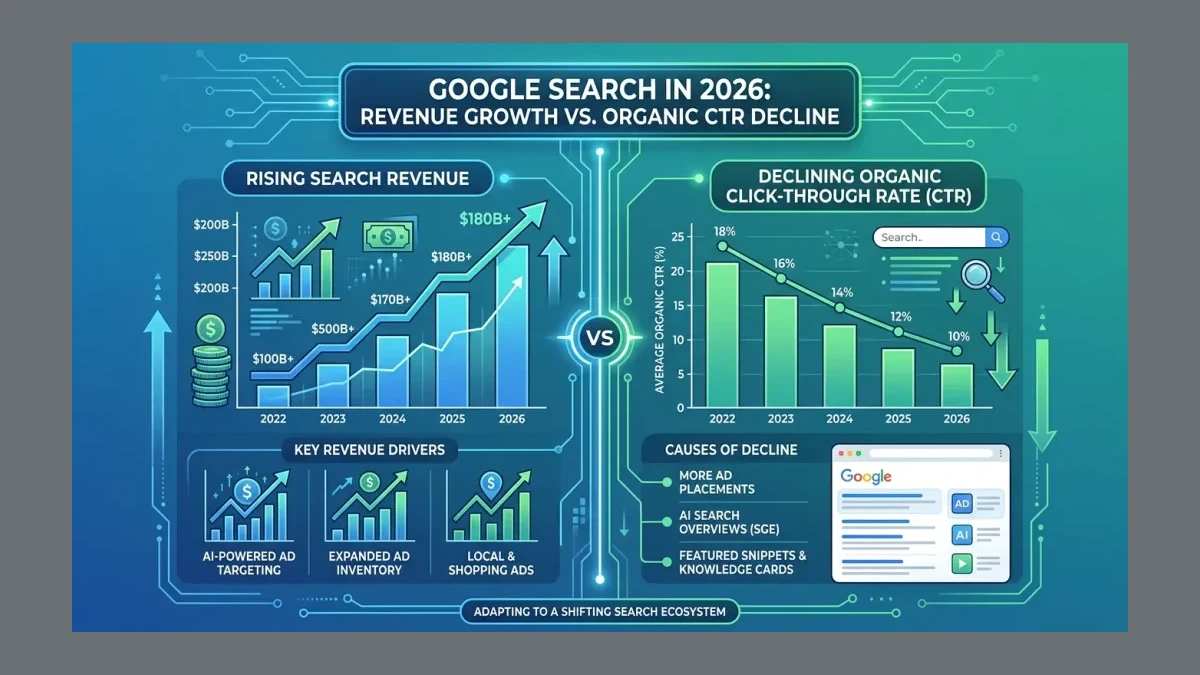
Use the cited studies for the figures discussed here; advertising growth and organic CTR describe different measures and should not be read as offsetting each other.
Why might cited Pakistani websites perform better than uncited ones?
Citation can be valuable, but “cited sites gain while uncited sites lose” is too simple. Seer Interactive’s updated research found that citation status was associated with stronger CTR in its informational-query analysis. It also showed that cited performance could remain below queries without AI Overviews. Being included may help without restoring the previous flow of visitors.
These findings do not prove that citations alone cause better performance. A recognised brand or a useful page may be more likely both to earn a citation and to attract clicks. Query intent matters too: someone seeking a definition behaves differently from someone comparing suppliers. Applying a pooled study result to a Pakistani store without checking its audience risks setting the wrong target.
Conversion evidence needs the same care. Adobe reported that AI-referred traffic to US retail sites converted 42% better than non-AI traffic in March 2026. The comparison covered non-AI channels, not organic search alone. It was not a Pakistani benchmark or evidence that every Google AI Overview citation produces a higher-converting visitor.
A useful citation may introduce your business to a customer who already understands the problem. That visitor could arrive with clearer intent. Equally, a citation may answer the question without generating any visit. Track observable referrals, landing-page engagement and completed enquiries where possible. Treat changes in direct traffic or branded searches as supporting signals, not proof that AI visibility caused them.
The practical tradeoff remains worth considering. Specific, reliable content can support both discovery and customer decisions. Generic content gives readers fewer reasons to choose your business, regardless of the search interface. Invest in useful information because it serves a real need; evaluate citation visibility alongside the revenue and leads that justify the work.
A citation is a visibility signal. A qualified enquiry or sale is a business outcome. Measure both without assuming they are interchangeable.
What separates Pakistani content that gets cited from content that gets ignored?
Clarity and evidence help, but there is no guaranteed citation format. Google’s guidance says established SEO practices remain relevant to AI Overviews and AI Mode. Pages need to be indexed and eligible to appear with a search snippet. Inclusion is not guaranteed, and there is no special schema required specifically for these features.
For content teams, the useful principle is straightforward: answer the reader’s question clearly and make the answer trustworthy. A direct opening can help someone find the point quickly. Supporting sources, relevant qualifications and accurate product details help them judge it. These are editorial strengths, not a formula that forces an AI system to select the page.
Consider a Pakistani financial advisory firm discussing mutual funds. “Mutual funds offer various returns depending on the fund” tells readers very little. A useful comparison would identify the funds, specify the reporting period, explain whether returns include fees and link to the underlying fund reports. It would distinguish historical performance from expectations. Adding an impressive but unchecked return figure would make the page worse.
The same approach applies elsewhere. An ecommerce comparison should explain current availability, delivery coverage and meaningful product differences. A SaaS guide should verify integrations instead of implying compatibility from a familiar brand name. Healthcare content should identify qualified reviewers and explain the limits of treatment evidence. Local relevance comes from accurate details that help a Pakistani reader make a decision.
Original experience can strengthen these pages. A supplier can explain a recurring installation problem; a retailer can answer questions its support team receives; a service business can document its process. Those contributions offer something beyond a rearrangement of other search results. They also give your team material it can substantiate when a reader asks for more detail.
A smaller business can publish useful information without matching a large competitor’s output. But team size, article frequency and data density do not determine citation performance on their own. Prioritise subjects where you have relevant expertise and something distinct to contribute. Build an editorial review process that checks accuracy before chasing a higher publishing volume.
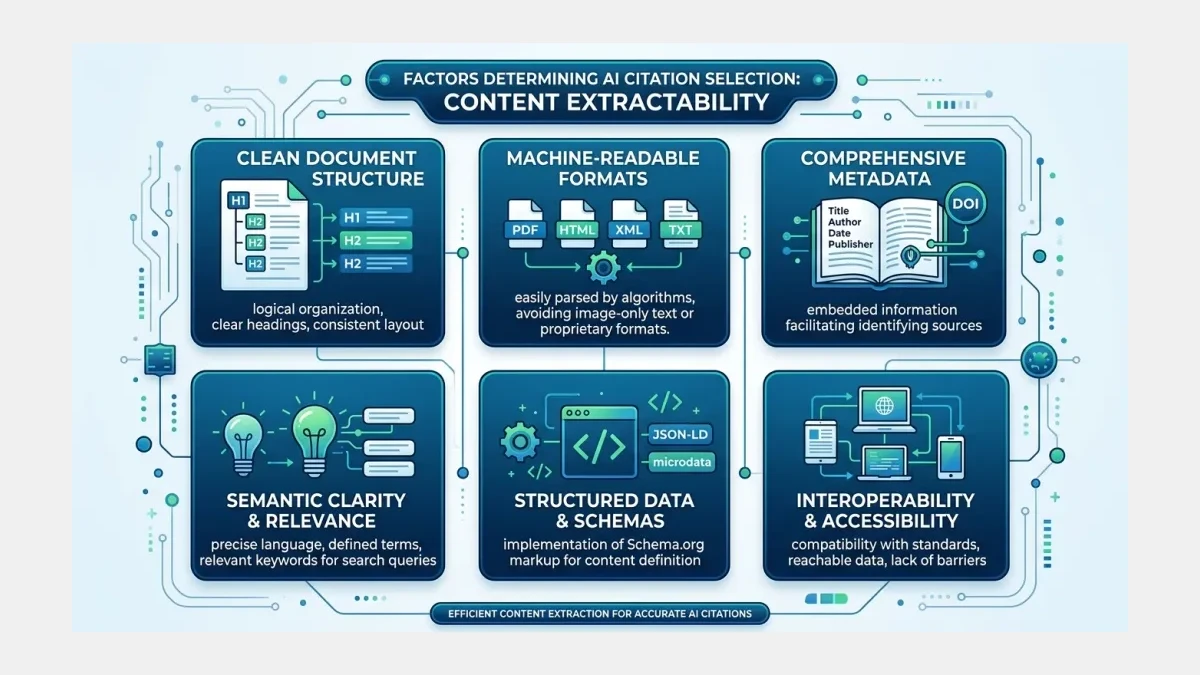
Clear presentation supports comprehension; it does not establish a guaranteed citation-selection mechanism.
How should Pakistani businesses restructure existing content for AI citations?
Begin with diagnosis rather than formatting. Check that important pages can be discovered and indexed, then assess whether they answer the searches that matter to your business. A page with weak evidence needs research. A page with outdated stock information needs correction. A page that buries a good answer may need a clearer introduction. These are different jobs.
Open with a concise response to the page’s main question, using the detail the reader actually needs. Follow with explanation, evidence and useful next steps. There is no reason to force a number or brand name into every paragraph. Where a figure matters, verify its source, scope and date. Where a qualitative explanation is more accurate, use it.
Keep headings descriptive and place supporting information near the claim it supports. Remove repetitive introductions and vague promises. Make comparisons easy to follow, and explain unfamiliar terms when necessary. A section should make sense to someone arriving directly from search, while the full article should still read naturally. Writing everything as disconnected fact blocks can make complex subjects harder to understand.
For an ecommerce page, this might mean checking product specifications, correcting prices, explaining delivery restrictions and answering purchase objections. For a service page, it might mean clarifying scope, eligibility and what happens after an enquiry. Formatting can reveal useful information already present, but it cannot replace missing evidence or turn inaccurate copy into reliable guidance.
Use an editorial record to track what changed and why. Note the affected pages, the business question each page answers and the evidence supporting the revision. After publication, review discovery, search performance and conversions over a suitable period. Avoid attributing every movement to the edit when promotions, seasonality or wider search changes happened at the same time.
The goal is content that helps people complete a task and gives search systems reliable information to work with. Our SEO content writing services focus on that combination of research, clarity and relevance. Citation monitoring can inform the work, but a change in citation frequency should not become the only definition of success.
Read next: Google AI Overviews in Pakistan: Organic Click Drop Causes and Zero-Click Content Strategy for Pakistani Brands in AI Search
If your business has lost organic traffic, WeProms Digital can review the affected pages, separate technical and content issues, and recommend priorities. Contact hello@weproms.com or message WhatsApp +92 300 0133399 to discuss an audit based on your search data and commercial goals.
Frequently Asked Questions
Are AI Overviews actually reducing traffic to Pakistani websites?
They can reduce click opportunities, but the scale varies by query and website. International studies support the concern; they do not establish a universal Pakistani loss rate. Compare your own impressions, rankings, CTR and conversions before deciding how much of a decline is associated with AI Overviews.
How do I check if my Pakistani website appears in AI Overview citations?
Inspect relevant Google results and open the supporting links to confirm whether your page is included. A brand mention without a link is different from a citation. Record the query, location and device context because results vary. Branded search growth alone cannot establish that citations caused the change.
What makes content extractable for AI engines?
Clear answers, descriptive headings and evidence that supports the surrounding claims make information easier to understand and reuse. Self-contained explanations can help, but every paragraph does not need a statistic. Preserve context and qualifications, especially where removing them would turn a careful statement into a misleading claim.
Does content length matter for AI citations?
There is no reliable word-count rule that guarantees inclusion. Use enough space to answer the question, explain relevant limitations and support the advice. Remove padding, but keep necessary detail. A shorter page is not automatically better, and expanding an article without adding useful information does not solve a visibility problem.
How much traffic do Pakistani websites lose when AI Overviews appear?
There is no verified market-wide percentage in the evidence cited here. Ahrefs’ updated estimate concerns top-ranking desktop CTR in its keyword sample, not total Pakistani website traffic. Your exposure depends on which queries trigger summaries, how visitors use those searches and how much those pages contribute to the business.
Should Pakistani businesses invest in AI optimization or traditional SEO?
Treat AI search visibility as part of a wider search strategy. Google’s guidance emphasises the same technical foundations and helpful content used for Search overall. Keep pages accessible, accurate and useful, and make structured data consistent with visible content. Agree service scope and pricing directly rather than relying on an unverified package figure.
Can small Pakistani businesses compete with large brands for AI citations?
Yes, smaller businesses can create relevant resources that deserve consideration. Specialist experience and accurate local information are useful strengths. That does not mean company size or established reputation becomes irrelevant, or that a well-formatted page will displace a larger competitor. Focus on subjects where your business can provide credible, distinctive help.
How quickly does content restructuring improve AI citation rates?
There is no dependable timetable or guaranteed improvement. Search systems must discover and process changes, and inclusion can vary afterwards. Agree a review period appropriate to the site, record the work and monitor outcomes. The time required to revise content depends on its condition, research needs and approval process.
Key Takeaways
- AI Overviews can reduce clicks to useful content. Google’s advertising revenue growth does not disprove that effect.
- Citation is associated with stronger performance in some studies, but it does not guarantee traffic growth or recovery.
- International research provides context; Pakistani businesses need their own query, page and conversion data to diagnose losses.
- AI referral conversion findings depend on market, period and comparison channel. Do not apply them as universal forecasts.
- Clear answers, reliable sources and relevant local expertise strengthen content without relying on a supposed citation formula.
- Prioritise qualified enquiries and sales alongside search visibility, and investigate technical problems before assuming every decline needs a rewrite.
About WeProms Digital
WeProms Digital is an SEO and content optimisation agency headquartered in Lahore, serving Pakistani SMEs, ecommerce brands and B2B teams across Lahore, Karachi, Islamabad, Rawalpindi, Faisalabad and Multan.
The team works on SEO, content strategy and visibility across traditional and AI-assisted search. Its approach connects technical checks and editorial improvements with the questions prospective customers ask and the outcomes businesses need to measure.
Get in touch: hello@weproms.com · WhatsApp +92 300 0133399
Sources & References
- Alphabet — Q1 2026 Earnings Call
- Ahrefs — Update: AI Overviews Reduce Clicks by 58%
- Seer Interactive — AIO Impact on Google CTR: 2026 Update
- Adobe — AI Traffic to US Retail Sites
- Pew Research Center — Google Users Are Less Likely to Click When an AI Summary Appears
- Google Search Central — AI Features and Your Website
- Search Engine Journal — AI Overviews Clicks Get Tested, Earnings Tell Two Stories
- Search Engine Journal — Google AI Mode In Chrome Isn’t Killing SEO; It’s Exposing Weak SEO
- Search Engine Roundtable — April & May 2026 Google Webmaster Report
Additional reading from industry feeds: