

TL;DR: CITE stands for Clarity, Information Density, Trust Signals and Entity Structure. It gives Pakistani content teams a repeatable way to write useful answers, support claims and describe their businesses consistently. It is an editorial framework, not a published Google citation formula. WeProms Digital’s content strategy services apply these principles to content planning and review. Clear structure supports useful content, but no checklist guarantees inclusion in Google AI Mode, AI Overviews or ChatGPT.
Pakistani businesses need content that answers real customer questions and gives readers reasons to trust the answer. A service page should explain what the business offers, where it operates and what its claims are based on. A product guide should distinguish verified specifications from opinion. Those improvements matter whether someone reaches the page through conventional search or an AI-generated answer.
The evidence needs the same care as the writing. Seer Interactive’s historical analysis reported 35% higher organic CTR and 91% higher paid CTR for cited brands in its Q3 2025 AI Overview query sample. Those are associations within an informational-query dataset, not guaranteed increases in visits or revenue for Pakistani websites. The original study explicitly raises shared brand authority as a possible explanation.
What is the CITE framework and why does it matter for Pakistani content?
The CITE framework is a content review method built around four pillars: Clarity, or direct answers; Information Density, or useful, verifiable detail; Trust Signals, or transparent authorship and evidence; and Entity Structure, or consistent descriptions of people, businesses, products and their relationships. Use it to identify weak passages and missing context without treating it as a platform requirement.
Google’s guidance for AI features says existing SEO fundamentals remain relevant. It does not require special AI markup or a prescribed writing format. Relevant content, technical accessibility and reliable information still matter. CITE helps an editorial team organise that work; it does not reveal the selection rules of Google, ChatGPT or Perplexity.
Preferred Sources also needs a precise explanation. Google announced its rollout to all supported languages on 30 April 2026, describing a feature that lets readers choose sites to see more often in Top Stories. Its current help page also describes source preferences affecting AI Mode and AI Overviews. These are reader preferences, not a certification awarded to pages that pass CITE.
For Pakistani businesses, the practical opportunity is to make English, Urdu and Roman Urdu content useful to its intended audience. The framework can guide blog posts, service pages, product descriptions, FAQs and landing pages. Apply the pillars according to the question: a delivery-policy page needs clear conditions, while a market analysis needs evidence and methodology.
How does the Clarity pillar determine whether AI engines extract your content?
Clarity means readers can quickly identify the answer and understand its scope. Open each section with the main point, then explain the evidence, exceptions or next steps. A short opening is a useful editing discipline, but there is no verified universal word limit that determines whether an AI system will cite a passage.
A Pakistani ecommerce page about wedding dress prices in Lahore should explain what affects the price and direct readers to current product listings. An opening might say: “Wedding dress prices in Lahore depend on the designer, fabric, embellishment and whether alterations are included. Compare the quoted outfit, delivery terms and fitting arrangements before choosing a bridal package.” Add actual prices only when supported by current listings or documented quotes.
Compare that with: “Pakistan has a rich tradition of bridal fashion, with many options available for brides-to-be across various price ranges.” The sentence supplies atmosphere but does little to help someone compare purchases. Background can still belong in the article; it should follow the information the visitor came to find.
Make important passages understandable when read independently. Name the product, service or policy rather than relying on “this approach” or “the method above.” Keep qualifications beside the claim they qualify. If a price excludes delivery or a service covers only Lahore, that limitation belongs with the answer, not at the bottom of the page.
Clarity also means choosing headings that match the actual question. “Delivery coverage in Lahore” is more useful than “Our commitment to convenience.” Avoid forcing every heading into a question when a descriptive label works better. The objective is straightforward navigation and accurate answers, not a rigid template repeated across unrelated pages.
Action step: Review the opening paragraphs of your highest-traffic pages. Put the answer first, remove unnecessary introductions and check that a reader can understand each important passage without searching elsewhere for its subject or limitations.
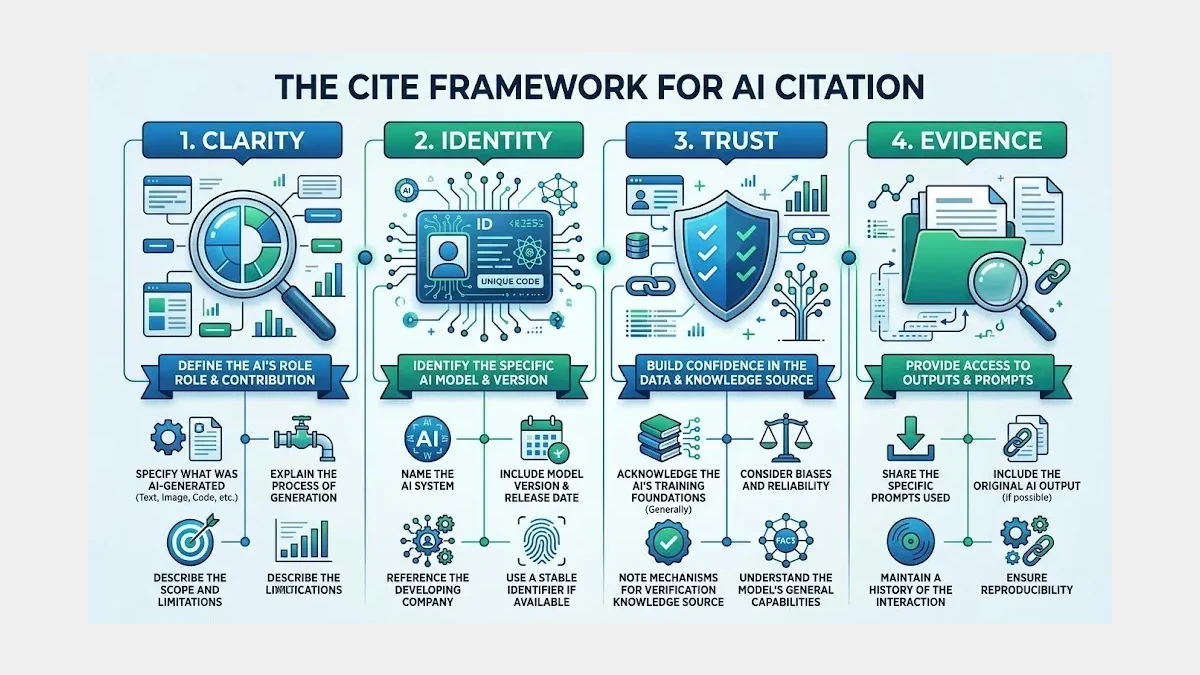
Why does Information Density separate cited Pakistani sites from invisible ones?
Information Density means providing enough relevant detail to answer the question properly. Useful detail can include a documented price, a product specification, a named source, an eligibility condition or a practical example. Adding numbers and proper nouns merely to meet a quota can make a passage less reliable rather than more useful.
Consider a paragraph about JazzCash adoption: “JazzCash is widely used in Pakistan for digital payments and has many active users across the country.” The problem is its vagueness. It does not tell the reader what “active” means, when the observation was made or which source supports it. That makes the claim difficult to assess.
A stronger paragraph would identify the reporting period, distinguish registered accounts from active accounts, and link to the provider’s published results. If it compares JazzCash with Easypaisa, it should use comparable definitions. Agent locations, merchant acceptance points and account totals measure different things; combining them without explanation creates an impressive-looking but misleading passage.
When reliable adoption figures are unavailable, change the question the paragraph answers. A merchant guide can explain what to verify before choosing a payment provider: settlement terms, fees, checkout compatibility and support arrangements. Those details can help a business make a decision without relying on an unsupported national market-share estimate.
Editorial rule: A useful fact is one a reader can verify and interpret. Include its source, scope and relevant limitations alongside the claim.
The same rule applies to conversion claims. Research comparing AI referrals with other traffic uses different markets, channels and conversion definitions. A retail purchase rate cannot automatically predict enquiries for a Lahore consultancy. Avoid turning unrelated studies into a universal conversion range or assuming that more detailed content itself causes higher-value traffic.
Action step: Audit the claims on your most commercially important pages. Replace vague statements with relevant evidence where available. Remove unsupported precision, and record the source and reporting period for any figure you retain. Judge density by how much the passage helps the reader, not by a numerical quota.
What Trust Signals do Google AI Mode and AI Overviews require from Pakistani content?
Trust Signals are the details that help people assess who created a page, why they are qualified and how its claims can be checked. CITE uses E-E-A-T — Experience, Expertise, Authoritativeness and Trustworthiness — as an editorial lens. Do not present these details as a separate, guaranteed admission test for Google’s AI answers.
For Pakistani content, useful trust information includes identifiable authors, relevant professional experience, links to primary evidence and accessible business details. Health, financial and legal topics need particular care because inaccurate advice can affect important decisions. Where expert review is appropriate, explain who reviewed the content and what their involvement actually covered.
Preferred Sources does not replace this work. Google’s source-preference guidance describes users choosing sources they value. A reader selecting a publisher does not validate every statement on its website, and publishing in Urdu does not automatically confer preferred status. Keep audience preference and editorial credibility distinct in your reporting.
Dates should also mean something. A review date is useful when someone has checked the page’s claims, links and advice. Changing a displayed date without substantive review gives readers little help. Keep publication and review information consistent with the actual editorial history, including any structured data that describes those dates.
| Trust Signal | What Pakistani Websites Need | Editorial Check |
|---|---|---|
| Author Bylines | Identifiable authors with relevant experience or credentials | Can readers assess who wrote the advice? |
| Source Citations | Inline links to primary sources such as SBP, PTA and vendor documentation | Does each source support the exact claim? |
| Schema Markup | Appropriate markup that matches visible page content | Are business and author details consistent? |
| Content Freshness | Meaningful publication and review information | Were changing claims actually checked? |
Business transparency should fit the organisation. A local clinic needs clear location and contact information; an online retailer needs accessible support and returns policies. Do not invent credentials, addresses or customer results to fill a template. Missing evidence is a reason to narrow a claim, not to make the wording more confident.
Action step: Add meaningful author information, check the evidence behind consequential claims and make business contact details easy to find. Review time-sensitive pages when their underlying information changes. Let the site’s existing date display communicate genuine editorial reviews.
How does Entity Structure connect Pakistani content to Google’s Knowledge Graph?
Entity Structure means describing distinct people, organisations, products and places consistently, with enough context to explain their relationships. A page should make clear which business provides a service, which city it serves and which product or policy it discusses. Naming more entities does not automatically add a page to Google’s Knowledge Graph or secure a citation.
Schema markup provides machine-readable descriptions of page content. Article markup can describe authorship and publication information; Organization markup can describe the business; Product markup can describe products and offers. Choose markup that fits the page and agrees with what visitors can see. Google states that special schema is not required for inclusion in its AI features.
There is no verified national baseline here for structured-data adoption across Pakistani websites. Assess your own templates instead of assuming that a platform, marketplace presence or plugin has completed the work. Inspect the published page, check for conflicting business details and confirm that product information matches the actual offer.
Relevant entities help readers when their relationships are explained. A payment guide might compare JazzCash and Easypaisa against a merchant’s requirements. A compliance article might identify the State Bank of Pakistan as the source of a specific rule. Adding Daraz, PTA, SECP and unrelated cities to the same paragraph does not make the advice stronger.
FAQ markup also needs a correction. Google’s documentation updates state that FAQ rich results are no longer shown in Google Search. Keep useful FAQ content for readers, but do not prioritise FAQPage implementation as a route to those results or as an established AI citation advantage.
For implementation support, schema markup and structured data services can help align templates with their visible content. Validation checks syntax and supported properties; it does not prove that Google will display a rich result or that an AI answer will reference the page.
Action step: Check Article markup on relevant blog posts and Organization information for the business. Review Product markup where applicable. Validate supported markup with Google’s Rich Results Test, then compare the output with the live page and correct any mismatches.
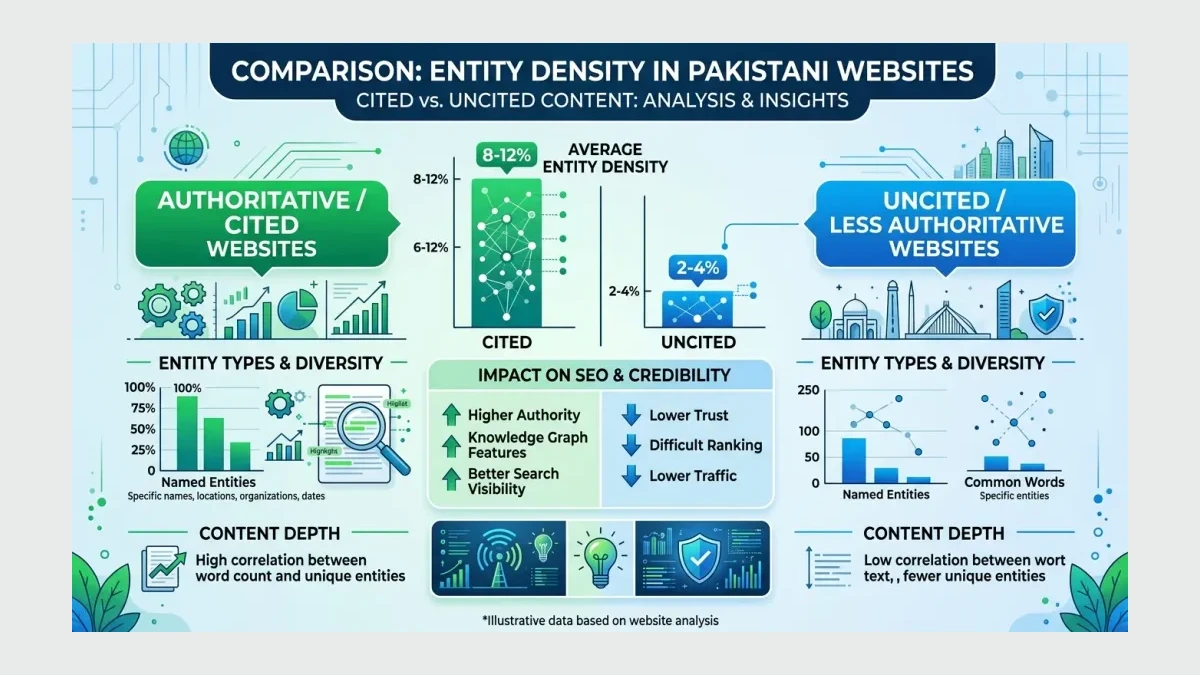
How do Pakistani businesses implement all four CITE pillars together?
Implementing CITE means making content review part of normal publishing. Begin with the customer’s question, identify the evidence needed to answer it and assign responsibility for checking changing claims. Apply the same process to new pages and existing content, with more attention to pages that influence purchases or important decisions.
Start with Clarity: does the opening answer the section’s question? Check Information Density: does each detail help, and can factual claims be verified? Review Trust Signals: can readers identify the author, evidence and business? Finally, check Entity Structure: are names, relationships and applicable structured data accurate and consistent?
A Pakistani marketing agency writing about email marketing for Lahore retailers could open by explaining which customer journeys the guide covers, such as post-purchase follow-ups and abandoned baskets. It should then explain the conditions needed for those campaigns, including available customer data and the retailer’s ability to measure resulting sales.
For Information Density, use documented campaign examples rather than an unsourced industry ROI converted into PKR. Name Klaviyo or Mailchimp only where the advice actually depends on the tool, and verify any claimed payment integration. For Trust Signals, explain the author’s experience and the evidence behind recommendations. For Entity Structure, describe the retailer, audience and relevant service relationships clearly.
Read next: Google AI Mode Content: How to Write Pages That Get Cited and Schema Markup and Structured Data for Pakistani Websites
Check technical accessibility alongside editing. A well-written page can still have crawl, indexing or rendering problems. Google’s AI guidance points site owners back to foundational SEO rather than a separate content formula. For other AI services, investigate their own discovery and access requirements instead of assuming Google’s guidance covers every platform.
Measure outcomes against the questions that matter to the business. Record the prompt, platform, language and cited URL when reviewing AI answers. Distinguish a brand mention from a linked citation, and compare referrals with actual enquiries or sales. AI search visibility monitoring and citation tracking can make that review more consistent without treating an isolated answer as a stable ranking.
If your content is rarely cited, investigate relevance, evidence, technical access and competing sources before blaming structure alone. WeProms Digital can review these issues alongside your content workflow. Contact hello@weproms.com or WhatsApp +92 300 0133399 to discuss an audit of your existing pages.
Frequently Asked Questions
What does CITE stand for in content optimization for AI search?
CITE stands for Clarity, Information Density, Trust Signals and Entity Structure. These pillars help editors review answers, evidence, authorship and consistent descriptions of businesses or products. They are practical publishing principles, not confirmed extraction criteria shared by Google AI Mode, ChatGPT and every other AI service.
How is the CITE framework different from regular SEO?
CITE concentrates on the quality and presentation of page content. SEO also includes technical accessibility, internal linking and other work that helps search engines discover and understand pages. The approaches overlap: Google says its established SEO fundamentals remain relevant to AI features. Content editing should sit within that broader work.
Can Pakistani websites in Urdu benefit from the CITE framework?
Yes. Direct answers, appropriate evidence and clear authorship can improve Urdu content just as they improve English content. Use terminology your audience understands and preserve meaning when translating. Preferred Sources is a separate reader-choice feature; its language expansion does not establish an automatic citation pathway for Urdu publishers.
What structured data should Pakistani websites implement first?
Choose markup according to the page: Article for appropriate editorial content, Organization for business information and Product for relevant product pages. Keep it consistent with visible details. Google does not require special schema for AI features, and FAQ rich results have been retired, so FAQPage is not a universal implementation priority.
How long does it take for CITE-optimized content to get cited by AI engines?
There is no reliable universal timeline. Discovery, indexing, query relevance and source selection can vary across platforms and pages. A rewritten page may never receive a citation. Check whether the updated content is accessible, then monitor relevant questions over time without promising a fixed waiting period or confusing indexing with citation.
Does implementing the CITE framework guarantee AI citations?
No. CITE can make content clearer, more useful and easier to verify, but it cannot control an AI system’s source choices. There is no established entity-count threshold or supported multiplier here that predicts selection. Evaluate the changes through reader usefulness, technical checks and observed performance rather than a guaranteed citation score.
How much does CITE framework implementation cost for Pakistani businesses?
Costs depend on the size of the content library, research requirements, technical problems and depth of rewriting. Request a scoped proposal that separates auditing, editorial work, implementation and monitoring. WeProms Digital can assess those requirements before quoting; this article does not provide a verified public price list or starting fee.
Should I rewrite all my existing content or apply CITE only to new content?
Start with existing pages that matter most to customers and revenue, especially where the answers are vague or the evidence is stale. Preserve useful material rather than rewriting for its own sake. Apply the checklist to new content, then work through the remaining library according to business value and editorial need.
Key Takeaways
- CITE provides an editorial checklist for clearer answers, useful evidence, transparent authorship and consistent entity descriptions.
- Seer’s historical study found an association between AI Overview citations and higher CTR; it does not establish guaranteed traffic or revenue growth.
- Google does not require special schema, entity quotas or a separate writing format for its AI features.
- Preferred Sources reflects readers’ choices. Its language expansion should not be described as a publisher trust certification.
- Use structured data where it accurately describes the page. FAQ content can remain useful even though Google has retired FAQ rich results.
- Measure relevant citations, referrals and business outcomes. Avoid unsupported national adoption figures, conversion promises and fixed citation timelines.
About WeProms Digital
WeProms Digital is a content strategy and generative engine optimization agency headquartered in Lahore, serving Pakistani SMEs, ecommerce brands and B2B teams across Lahore, Karachi, Islamabad, Rawalpindi, Faisalabad and Multan.
The team specialises in content strategy, generative engine optimization and SEO services. Its work connects content planning, editorial review and technical implementation to help businesses present useful information across conventional search and AI search experiences.
Get in touch: hello@weproms.com · WhatsApp +92 300 0133399
Sources & References
- Google Search Central — AI Features and Your Website — SEO guidance and structured-data requirements.
- Google — Preferred Sources Language Expansion — Rollout to supported languages.
- Google Search Help — Preferred Sources — How reader preferences work.
- Google Search Central — Documentation Updates — Retirement of FAQ rich results.
- Seer Interactive — AI Overview Impact on Google CTR — Historical citation and CTR analysis.
Additional reading from industry feeds:
- Search Engine Roundtable — Google Preferred Sources Now Available For All Languages Globally
- Search Engine Journal — Google AI Mode In Chrome Isn’t Killing SEO; It’s Exposing Weak SEO
- Digital Applied — AI Search SEO Statistics
- QuickSEO — ChatGPT vs Google Search Market Share and User Data
- NOBS Marketplace — Google Search Growth With AI Overviews
- Search Engine Roundtable — Google Webmaster Report
- Neil Patel Blog — How to Adapt to AI Overviews Stealing Clicks
- Search Engine Journal — AI Overviews Clicks Get Tested, Earnings Tell Two Stories
- Search Engine Roundtable — Google Discover With New You Asked To See Label